Potential Bias in P/C—a Deep-Dive Q&A


Potential bias in property/casualty insurance is an issue that has been gaining considerable attention, most particularly from state regulators. Having anticipated the growing interest, the Casualty Practice Council’s (CPC) P&C Committee on Equity and Fairness (PCCEF) released an issue brief in June on potential bias in marketing and underwriting policies, and held a July 30 webinar, moderated by committee Chairperson Tyson Mohr and featuring committee members, who presented on bias-related issues. The CPC will follow this activity with a presentation at next month’s Casualty Loss Reserve Seminar, Sept. 14–16 in Las Vegas, with Casualty Policy Project Manager Rob Fischer moderating a session featuring PCCEF members speaking on bias.
Casualty Quarterly spoke with Mohr and PCCEF Vice Chairperson Devyn McNicoll about some of the key issues surrounding bias that are gaining attention, and the committee’s plans to continue addressing the important issue going forward.
How has the conversation about bias and discrimination in insurance pricing evolved in the past five years since it initially caught on as a hot button issue at the state regulatory level?
Tyson Mohr: First, it’s important to recognize that “discrimination” has been a term of art in the insurance context for almost a century. It differs from how it is used in other contexts and everyday speech. Laws in most states specify that rates must be “not excessive, inadequate, or unfairly discriminatory,” which is understood to mean that rates should be based on actuarially justifiable estimates of expected future losses and expenses.
“Bias” is also used in various ways depending on context. For example, in statistics it usually refers to something like “accuracy,” whereas in other contexts it means “prejudice.”
I mention these to emphasize that until the last five years or so, in an actuarial context, these terms were not broadly understood to imply unequal treatment of people based on race, gender, or any other personal characteristic.
This is not to say that concerns about fair treatment of marginalized populations are new to insurance conversations. For example, in 2007 the Federal Trade Commission studied whether credit-based insurance scores were proxies for race or income. They just did not use the term “bias” to refer to this research, as they likely would have today.
After events during the summer of 2020 lead to a reckoning with racial bias in the U.S., there was an increased focus on many aspects of society that could negatively impact racial minorities. Insurance was part of that enhanced attention and focus, with broader conversations about fairness and bias happening among regulators, industry, consumer advocates, and media. Now, for many individuals, the terms do imply that insurance practices can adversely impact marginalized populations. Around the same time in the actuarial space, our committee was formed, continuing education requirements were updated to require an hour of bias, and actuarial societies started researching the topic.
Devyn McNicoll: Quite a bit has changed! Five years ago, the conversation was largely conceptual, focused on whether bias existed in insurance pricing or underwriting and whether it could even be measured. Since then, studies have been performed, such as the District of Columbia’s “Evaluating Unintentional Bias in Private Passenger Automobile Insurance.” Colorado passed state legislation (CO SB21-169) requiring bias testing, and the New York Department of Financial Services published a public notice (Circular Letter 7) stating a desire to apply disparate impact testing concepts to insurance. Colorado is still working on bias-testing regulations, which would be the first of its kind when they are released. Carriers are also increasingly building internal testing frameworks, rather than waiting to be told what to do.
The other shift has been inside the actuarial profession itself. Our committee has spent significant time on something that sounds basic but is not: defining what we mean by terms like “bias,” “fairness,” and “unfair discrimination.” Actuaries hold genuinely diverse views on these terms, and that definitional work has turned out to be a prerequisite for almost everything else we want to do.
Much of the regulatory actions the PCCEF has engaged on has had to do with pricing in private passenger auto insurance. Do questions about bias or unfair discrimination ever come into play on homeowners insurance?
DM: Absolutely. These questions come up across the P&C industry, including in homeowners, as well as in life, health, workers’ compensation, and commercial lines. Each brings its own set of challenges. The data available differs from line to line, as does the amount of regulatory attention each has received, but the underlying questions are similar. We have a subcommittee currently working on a paper and a series of presentations focused specifically on bias in commercial insurance.
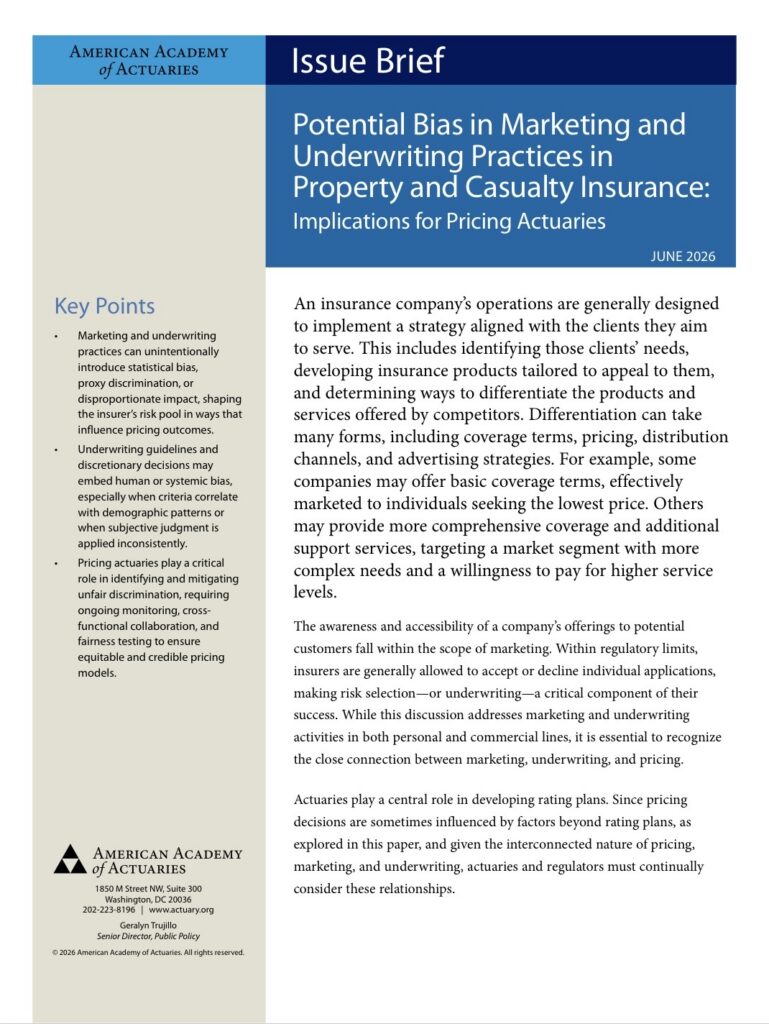
TM: Because of how we have chosen to design our cities, in most places a car is necessary to participate in economic and community life. Auto insurance is required to drive, so it is effectively required coverage for most people. This triggers increased regulatory oversight compared to optional coverages. However, recently homeowners insurance has also garnered a lot of attention, as many factors have led to rate increases. Concerns about affordability, availability, and fairness come hand-in-hand.
The PCCEF, working with the Academy’s research team, recently surveyed a sample of Academy members on bias. What were the goals of the survey and what were you hoping to learn from the results?
TM: It started while we were discussing 2026 priorities. As people who think a lot about these issues, we realized that we might not be in touch with the general actuarial population. In other words, we were worried that we were biased and hoped that a survey could give us a reality check.
Before Devyn makes me define my terms, I mean statistically biased: not a representative sample of the larger population from which we were drawn. Are you happy, Devyn?
DM: Ha! Thank you for easing my anxieties, Tyson!
The survey covered the following areas:
- Attitudes toward regulation and monitoring of unfair discrimination beyond existing practice.
- The practical challenges actuaries face in bias testing based on race—including access to race-based data, differing views on the value of such testing, differing understandings of fairness and unfair discrimination, privacy concerns, and legal and reputational risk, along with current practices for mitigating bias.
- Whether definitions of key terms like “bias” and “discrimination” are clear and useful in practice.
- Ideas for how actuarial practice could evolve to produce fairer and more equitable models.
We were after two things. First, identifying where there is genuine disagreement within the profession versus where it is simply miscommunication. That tells the committee where guidance would actually build shared understanding. Second, understanding the concrete obstacles actuaries hit when they try to integrate bias testing into their analyses. We plan to publish a commentary report summarizing the findings.
The PCCEF has been exploring the issue of unequal distribution of auto crash frequency/severity in 2025. Can you share more about what you are hoping to learn?
DM: The industry has started to examine unequal distribution of frequency and severity by protected class at a quantitative level, which is a meaningful step. We want to understand not just whether there are premium or coverage differences across groups, but whether there are genuine loss cost differences, and if so, what is driving them.
That distinction matters because it points toward risk mitigation, not just pricing fairness. If certain communities are experiencing more frequent or more severe crashes, the most valuable response may be reducing that risk rather than only adjusting how it is priced. This kind of work helps us assess what solutions exist and where the profession could encourage products, research, and interventions that reduce loss for insureds.
TM: Something I love about this project is that it’s an area where almost everyone agrees. There is clearly a lot of insurance risk in racial minority communities. This risk comes with trauma, inconvenience, injury, and sometimes death. If we can find why this risk exposure exists and how to reduce it, we reduce that trauma. The reduced risk will flow through insurance pricing algorithms to produce lower premiums, reducing racial inequalities in premiums. In other words, insurance can be used to measure the success of risk mitigation activities. Everyone wins in this scenario.
We are actively looking to engage with others working in this space, including carriers, regulators, non-profits, and consumer advocacy groups, to figure out where our committee can have the most impact.
What new papers is the committee planning to publish later this year? Is the committee open to new volunteers?
DM: We are drafting a paper titled Anatomy of Bias in a Commercial Multi-Peril Policy. It uses the life cycle of a commercial multiple peril (CMP) policy as a framework for qualitatively identifying where different kinds of bias can enter, including marketing, sales, underwriting, pricing, claims, and catastrophe management. The aim is to give practitioners a structured way to think about where to look, rather than conclusions about any particular program.
TM: Several experienced members are rolling off the committee this year. We could really use some more volunteers to help us keep the work going! If you are passionate about this topic, please consider listing us in the upcoming Call for Volunteers survey (see details below). And when I say “passionate,” I include people who are passionately against some aspects of this topic. We need a wide variety of viewpoints to produce the best work. As always, Rob Fischer is a good point of contact to express your interest in volunteering, at [email protected].
▶ Call for Volunteers—Interested in volunteering? The Academy’s 2026 Call for Volunteers kicks off Aug. 17. Join the Academy’s Membership Department for an Aug. 20 free member webinar.
CPC Presenting at NAIC, CLRS, CAS; Early Discounts Available for P/C Opinion Seminar
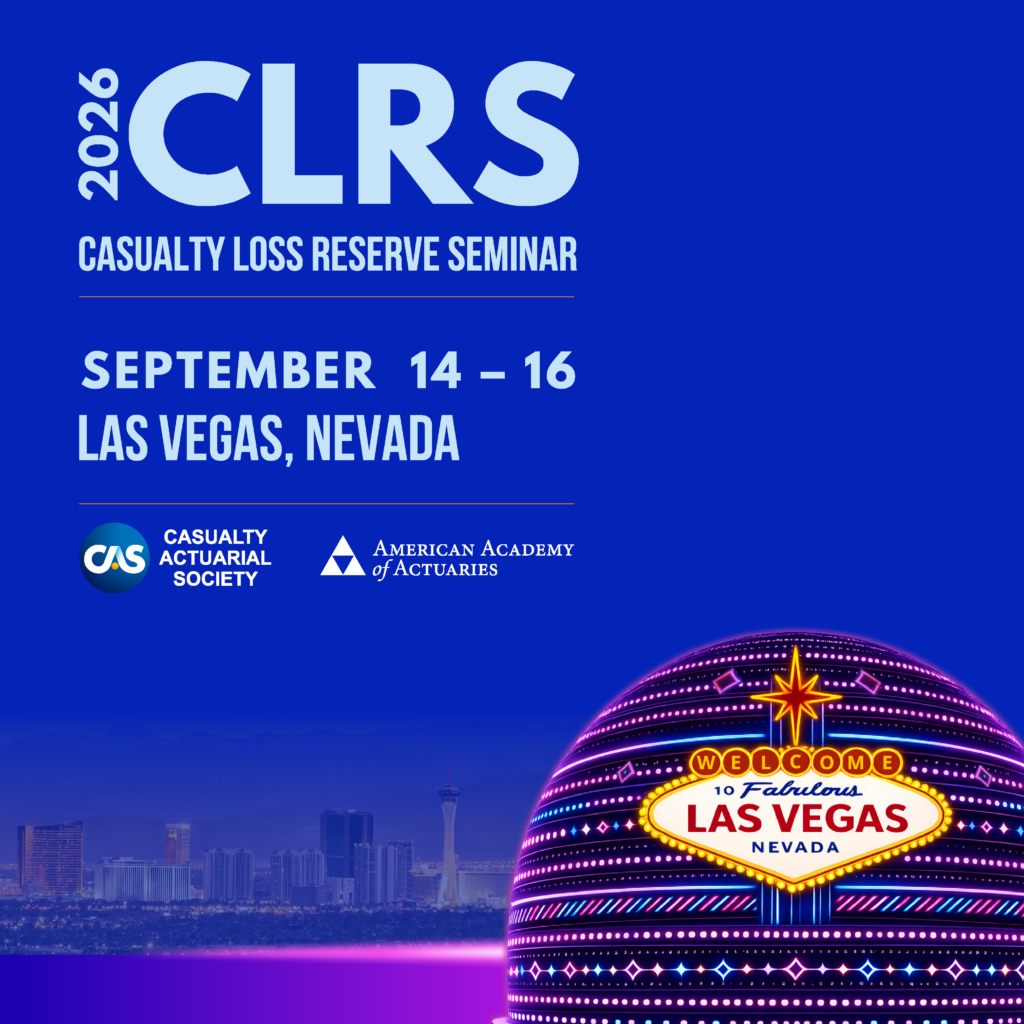
The CPC will present at multiple upcoming conferences and events. Staff and volunteers are presenting at this week’s NAIC Summer National Meeting in Columbus, Ohio, including an update to NAIC’s Casualty Actuarial and Statistical (C) Task Force (CASTF).
CLRS, September—Staff and volunteers will present at the 2026 Casualty Loss Reserve Seminar (CLRS), Sept. 14–16 in Las Vegas. Actuarial Board for Counseling and Discipline (ABCD) member Arthur Randolph and former ABCD member Albert Beer will present in a professional development session, “Sticking to Ethics in High-Stakes Environments.” The PCCEF will present findings from two forthcoming work products related to bias, featuring committee member Tara Miller and Academy Director of Research Steve Jackson. Casualty Policy Project Manager Rob Fischer will facilitate a roundtable discussion on P/C public policy issues. See the full agenda. CLRS is co-sponsored by the Academy and the Casualty Actuarial Society (CAS). Register today.
CAS Annual Meeting, November—The Academy will also participate in the CAS Annual Meeting, Nov. 8–11 in Honolulu, at which Fischer will moderate a policy session highlighting regulatory and public policy priorities from the NAIC and federal government perspective. Included at that session will be a representative from the Hawaii Department of Insurance and volunteers from the CPC. Early registration discounts end Sept. 4. Register today.
P/C Opinion Seminar, December—The Academy’s popular Seminar on Effective P/C Loss Reserve Opinions will be held Dec. 7–8 in Nashville, Tenn. Called by one past attendee “a great distillation of changing requirements and rules, as well as a good pooling of experience,” the seminar is designed for P/C actuaries who prepare NAIC statements of actuarial opinion. Registration has just opened for this annual event and early discounts are available. Register today.
Susan Kent Nominated President-Elect; Kevin Dyke as Casualty VP

Casualty Vice President Susan Kent was nominated to be the Academy’s next president-elect, and former Actuarial Standards Board (ASB) Chairperson Kevin Dyke (pictured) was nominated to succeed her as casualty vice president.
Kent will follow current President-Elect Frank Todisco, who will in turn succeed current President Tricia Matson as the Academy’s next president. She received an Academy Outstanding Volunteerism Award in 2023 for her efforts on addressing bias in P/C insurance, offering actuarial considerations to state regulators and other policymakers in Colorado related to that state’s insurance anti-discrimination law.
“I am deeply honored to be selected as president-elect of the American Academy of Actuaries and grateful for the opportunity to serve a profession that plays such a critical role in supporting sound public policy and financial security,” Kent said. “At a time of rapid change—from advances in data and analytics to evolving risks and regulatory landscapes—actuaries are uniquely positioned to bring clarity, rigor, and insight to complex challenges,” she said.
Dyke was on the ASB from 2020 to 2025, serving as vice chairperson 2022–2023 and chairperson 2024–2025. A member of the Committee on Qualifications and the PCCEF, Dyke has also served on the Council on Professionalism, the Automobile Insurance Committee, and the Medical Professional Liability Committee.
They will begin their new roles following the Academy’s Leadership Transition event in mid-December.
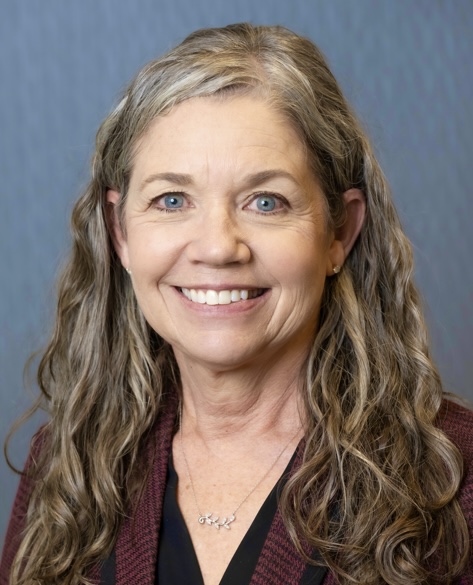
VP Corner
CPC Continues Active Year With a Busy Summer
Susan Kent
Vice President, Casualty
The CPC continues its busy year! At the CAS Spring Meeting in May, the Automobile Insurance Committee presented on cost drivers and the Homeowners Insurance Task Force presented on home replacement costs. Additionally, the Climate Change Joint Committee presented on climate issues and actuarial insights from attribution science. As noted in this issue, the CPC will present at the NAIC Summer Meeting and will present at next month’s CLRS in Las Vegas and CAS’ annual meeting in Honolulu in November.
In June, the CPC held a half-day planning meeting and provided comments on actuarial standard of practice (ASOP) exposure drafts for ASOP Nos. 30, 39, and 41.
In late July, I attended the 2026 Actuarial Research Conference (ARC 2026), held at The Ohio State University. The Academy research staff, as well as other Academy volunteers, also participated. I had the opportunity to moderate a panel featuring two submissions for the Academy’s 4th annual Award for Research. The award was presented to Olivier Côté, a Ph. D. candidate at Université Laval’s School of Actuarial Science in Quebec City.
Moving ahead, I am honored to be nominated as the Academy’s next President-Elect, and look forward to transitioning the leadership of the Casualty Practice Council to my successor, Kevin Dyke, as I prepare to begin the President-Elect duties.
▶ Award for Research—For more on the Award for Research and ARC 2026, see the Actuarially Sound blog post.
Actuary Voices Spotlights Risk & Polycrisis; Auto Insurance
A new Actuary Voices episode features Contingencies Editor-in-Chief Preeti Vasishtha’s conversation with past Casualty Vice President Rade Musulin, recipient of the 2025 Jarvis Farley Service Award and author of Managing Risk in a World of Polycrisis, the cover story of the current issue of Contingencies. They discuss systems thinking, scenario analysis, climate and geopolitical risk, the limitations of relying solely on historical data and sophisticated models—and how actuaries can help policymakers navigate uncertainty in an increasingly complex and interconnected world.
In a June 1 Actuary Voices episode, Academy Policy Content Manager Ted Gotsch sits down with Casualty Policy Project Manager Rob Fischer and Automobile Insurance Committee members Margo MacKenzie and Jeff Clinch to explore one of the most pressing issues facing consumers and insurers today: the rising cost of auto insurance. The conversation included discussion of the committee’s issue brief released earlier this year.
Webinar Examines Workers’ Comp
A July 23 webinar, Is Workers’ Comp Beginning to Turn? Perspectives on Emerging Trends, featured a discussion on economic cycles and how actuarial and structural factors may signal a turning point in workers’ compensation. Watch a replay on Academy Learning.
Actuarially Sound Examines Future of the NFIP
An Actuarially Sound blog post covers the future of the National Flood Insurance Program (NFIP), including what the program does—and does not—cover. It notes a recent executive order on the NFIP and the critical perspective the Academy offers on the program. Actuarially Sound, accessible via the Contingencies webpage, offers regular public policy insights, highlighting Academy policy priorities and external engagement with the Academy’s stakeholders.
Contingencies Web Exclusive Examines Understanding Insurance Policies
In the latest Contingencies web exclusive, What Your Policy Actually Covers—and Why, Zora Law writes how many people don’t read their insurance policies until something goes wrong and offers insight into what policyholders need to know before that happens—and how actuaries think about risks that most consumers don’t see coming.
Academy Presents at CAS Spring Meeting
Academy staff and volunteers attended and presented at the CAS Spring Meeting, May 3–6 in New York. Those attending included President Tricia Matson, President-Elect Frank Todisco, Executive Director Bill Michalisin, Casualty Vice President Susan Kent, and Climate Change Joint Committee (CCJC) Chairperson Seong-min Eom.
Public policy staff and volunteers, along with professionalism staff, engaged and interacted with attendees on Academy membership, volunteering, and research, as well as public policy and professionalism issues.
Academy presentations included:
- Kent, with Automobile Insurance Committee Past Chairperson Jared Smollik and committee member Margo MacKenzie, presented Cost Drivers in Automobile Insurance.
- Eom, along with CCJC members Dorothy Andrews and Nate Luketin, presented the session When the Climate Changes the Odds: Actuarial Insights from Attribution Science.
- Homeowners Insurance Task Force Vice Chairperson Emma Casehart and member David Reyes presented the session Replacement Cost of a Home.
Highlights From
Casualty Quarterly
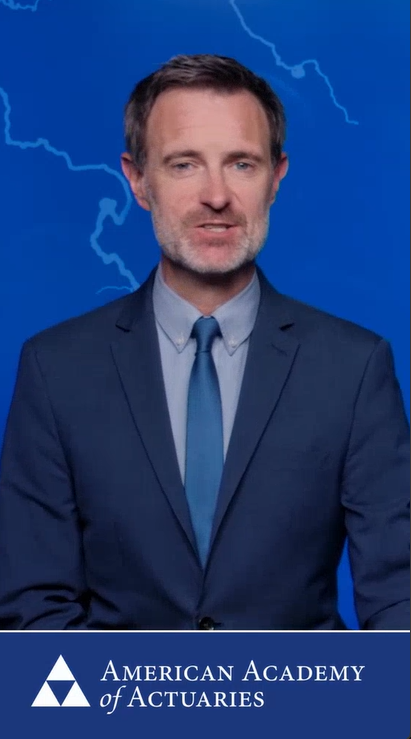
Prefer to watch your news? Check out this “Highlights From Casualty Quarterly” video for a quick recap of what you need to know.
ASOPs—Your Feedback Wanted
The Academy and the ASB want your feedback on how you use and access actuarial standards of practice (ASOPs). To take a short, five-question survey about how you access the ASOPs, click here.
▶ CPC Comments on ASOPs—The CPC submitted comments on the second exposure draft of ASOP No. 30, Profit Provisions, Contingency Provisions, and the Cost of Capital in Property/ Casualty Risk Transfer and Risk Retention, commented on the second exposure draft of ASOP No. 39, Treatment of Catastrophe or Extreme Event Losses in Future Cost Estimates for Property/Casualty Risk Transfer and Risk Retention, and submitted comments on the third exposure draft of ASOP No. 41, Actuarial Communications.
ACI Releases Fall 2025 Data

The Actuaries Climate Index (ACI) has been updated through November 2025, with the index’s five-year moving average rising slightly from 1.41 to 1.42. The ACI is a research project funded jointly by the Academy, SOA, CAS, and CIA. For more, visit the ACI website.
▶ Actuarially Sound—A related Actuarially Sound blog post by Academy Assistant Research Director Kim Ferrero covers how the ACI serves as an objective, data-driven monitoring tool as climate risks grow more complex.
Academy in the News
A consumer-directed Yahoo! Finance story on the effect of tariffs on automobile insurance cited the Automobile Insurance Committee’s April issue brief on the subject.
Former Committee on Cyber Risk Chairperson and Automobile Insurance Committee member Norman Niami provided an actuarial perspective on cyber risks for autonomous vehicles to Digital Insurance (subscriber-only).
P/C News in Brief
The Committee on Cyber Risk submitted a comment letter to the Federal Insurance Office within the U.S. Department of the Treasury on its request for comments on the 2026 Report on the Effectiveness of the Terrorism Risk Insurance Program.
The P/C Committee on Equity and Fairness submitted a comment letter to the District of Columbia Department of Insurance, Securities and Banking on an exposed balancing test.
The Committee on Property Liability and Financial Reporting (COPLFR) submitted a comment letter to CASTF on its recent exposure of the Schedule P Title instructions.
The Homeowners Insurance Task Force submitted a comment letter to CATSF on its recent exposure of its draft Rate Regulation White Paper.
A European Actuarial Journal research article on the implications of changing climate risks for life insurance reserves noted the role of the ACI in educating actuaries about climate trends.
Legislative/
Regulatory Activity
Federal
The Department of Agriculture’s (DoA) Rural Housing Service (RHS) issued a rule updating the insurance requirements and procedures for its Multi-Family Housing (MFH) Direct Loan and Grant programs, modernizing coverage amounts and deductible limits to align with current industry standards.
DoA’s Federal Crop Insurance Corporation released a set of regulatory updates pertaining to the Federal Crop Insurance Program, focusing primarily on clarifying the authority and scope of final agency determinations and interpretations.
Rep. Andrew Garbarino of New York introduced HR 9056, directing the Federal Emergency Management Agency administrator to allow certain recipients of the Flood Mitigation Assistance Grant, and other grants, to use grant monies for the payment of premiums for a community-based, parametric flood insurance policy.
State
Georgia Gov. Brian Kemp signed the following:
▶ SB 503, establishing procedures for refunds of excess profits by automobile insurers and introducing storm damage mitigation programs to reduce property damage costs from natural disasters.
▶HB 1344, revising provisions related to insurance fraud reporting and investigation, including the process for insurers and licensed persons to report suspected fraud.
Louisiana Gov. Jeff Landry signed the following:
▶SB 100, mandating transportation network company (TNC) drivers to carry written or digital proof of insurance coverage at all times while using a vehicle in connection with the TNC’s digital network.
▶HB 413, barring automobile insurers from using loss experience arising solely from a catastrophe or natural disaster that affected only other lines of insurance as a rating factor, while allowing such a rating factor to be used for multi-line policies.
Maryland Gov. Wes Moore signed the following:
▶HB 1186 , a peer-to-peer car sharing measure requiring vehicle owners and drivers be covered by a motor vehicle liability insurance policy that meets or exceeds state minimums, with the sharing program serving as the primary insurer if personal coverage lapses.
▶SB 739, mandating a study of evaluating the relationship between climate change, the availability and price of homeowner’s insurance, and emergency and disaster preparedness.
▶HB 200, requiring flood risk disclosures for certain residential property sales in Maryland.
Virginia Gov. Abigail Spanberger signed:
▶SB 693, prohibiting motor vehicle insurers from using unfairly discriminating factors, such as consumer credit information or credit-based insurance scores, when determining premiums, rates, or coverage terms.
▶SB 767, introducing new requirements for motor vehicle glass repair shops, mandating that they notify customers prior to service about the presence of advanced driver assistance systems and whether calibration or recalibration of these systems is necessary after windshield repair or replacement.
▶SB 536, requiring insurers issuing medical malpractice liability insurance policies and healthcare providers with self-insurance or risk retention arrangements in Virginia to disclose annually premiums, claims activity, litigation costs, and financial condition for the preceding calendar year.
▶HB 808, mandating that insurers provide a detailed explanation of the changes made to a loss estimate, list all modifications, and retain all versions of the report with identification of the individual responsible for each change.
Florida Gov. Ron DeSantis signed SB 7024, establishing comprehensive confidentiality and exemption provisions for sensitive cybersecurity, information technology, and operational technology data held by Florida state agencies.
Colorado Gov. Jared Polis signed SB 26-155, creating the “Strengthen Colorado Homes Enterprise,” which is intended to strengthen homeowner risk mitigation, primarily through grants to defray installation costs for “resilient roof systems” designed to reduce hail and windstorm losses and related claims and through related services for insurer participation.
Hawaii Gov. Josh Green signed HB 2282, requiring insurers to provide explanations of premium increases upon request, as well as amending the notice requirements for cancellation or nonrenewal of a property insurance policy.
Tennessee Gov. Bill Lee signed HB 2175/SB 2458, creating new state insurance requirements for “delivery network companies” (DNCs) and DNC drivers operating under a digital-network platform.
Oklahoma Gov. Kevin Stitt signed HB 3781, making changes to Oklahoma’s Property and Casualty Competitive Loss Cost Rating Act, which governs property and casualty ratemaking standards, rate filings, and how the insurance commissioner may challenge and disapprove rates.
Mississippi Gov. Tate Reeves signed SB 2409, authorizing inspections and certifications for wind resistance and hurricane mitigation in addition to offering grants of up to $15,000 to property owners for mitigation measures for retrofittable insurable homes.
Kentucky Gov. Andy Beshear signed HB 527, creating a grant program aimed at enhancing the resilience of insurable dwellings against wind and hail damage
Idaho Gov. Brad Little signed H 562, revising current laws regarding cancellation and nonrenewal of certain commercial and homeowner policies.