By Barbara Bryant
Public Policy Technical Writer
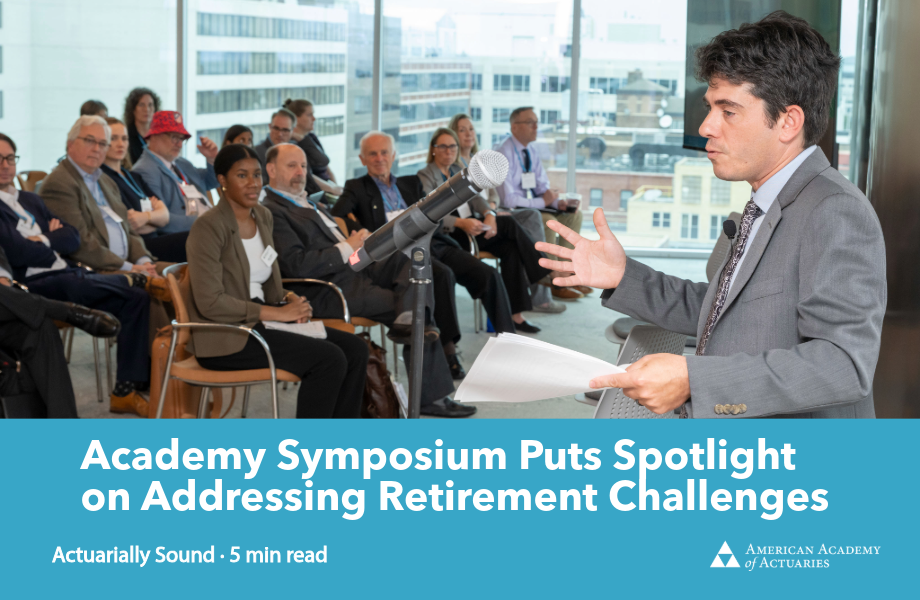
Federal officials, researchers, actuaries, and other retirement experts met on Sept. 23 in Washington at an Academy symposium to discuss the challenges many Americans face in supporting a financially secure retirement.
Hosted by the Academy’s Retirement Practice Council (RPC), Toward a Sustainable Retirement System: Choices That Shape the Future focused on topics ranging from strategies to help employers preserve and grow their retirement plans to proposals for addressing the Social Security system’s financial challenges. Discussions also centered on increasing access to and participation in retirement savings and lifetime income programs as well as approaches retirees could take to spend down their savings.
Bruce Cadenhead, the RPC’s vice president, opened the event by pointing out that the new faces who take office after the mid-term elections could engender fresh perspectives on retirement issues and a willingness to explore many of the topics and proposals that were raised during this forum. He predicted the future of the private retirement system will require an emphasis on sustainability and increasing the number of available plan choices.
During his keynote address, Aron Szapiro, senior ERISA program advisor in the Labor Department’s Employee Benefits Security Administration (EBSA), presented ideas on refining retirement plan design from a regulatory and policy perspective, including ways to lift program barriers employers face and efforts to promote plan-based lifetime income options.
He stressed that EBSA is a dedicated player in “a public-private partnership to make retirement work.” He encouraged actuaries to continue providing EBSA with “thoughtful comments on rulemakings,” and asked the audience to “send us requests for advisory opinions.” Szapiro also outlined EBSA’s priorities, which include helping more small businesses offer retirement plans. He told the audience, “If you have best practices ideas on big plans that small plans can adopt, we’re all ears.”
Employer-sponsored programs
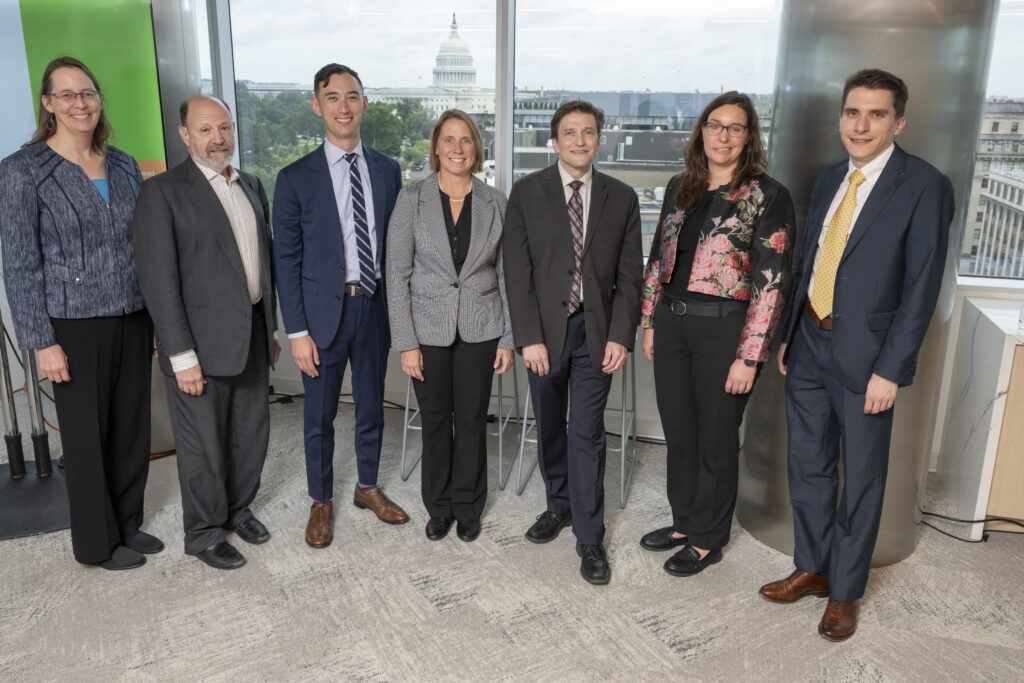
RPC Pension Committee Chairperson Grace Lattyak moderated a discussion on ways to sustain employer retirement programs with Chantel Sheaks, principal at Mindset; Anne Henderson, participant and plan sponsor advocate with the Pension Benefit Guaranty Corporation (PBGC); and RPC Multiemployer Plans Committee Vice Chairperson Susan Boyle. They discussed evolving employer strategies vis-a-vis benefit adequacy and risk management, and the importance of having the ability to sustain solid and competitive retirement options in the face of cost constraints.
Strategies could include making defined benefit plans portable, allowing participants to take the plan with them when moving from one employer to the next, and making plans for small businesses simple and scalable. The panel also emphasized the importance of simplifying plan administration while increasing the amount of education they provide to employees about plan options.
Closing retirement savings gaps
Connie Rydberg, RPC co-vice chairperson, explored the retirement savings challenges many workers and retirees face with panelists Barbara Marder, CEO of the Employee Benefit Research Institute; Spencer Look, RPC Defined Contribution Subcommittee chairperson; and Jay Hines, the subcommittee’s vice chairperson. All agreed that debt, ranging from student loans to healthcare costs, is a major impediment to saving.
They also noted that low credit scores are correlated with low retirement plan participation rates. Although lifetime income products could help people make wise accumulation and decumulation decisions, many employers don’t offer them and plan participants need to be educated on how they work. Rydberg also noted that society is “still in the early stages of figuring out how to support participants in the decumulation phase.”
Sustaining Social Security
RPC Social Security Committee Chairperson Sam Gutterman explored ways to sustain the Social Security program with Ron Gebhardtsbauer, professor emeritus of actuarial science at Penn State University, and Richard Jackson, president of the Global Aging Institute. Some of the many potential strategies to strengthen and preserve the financial solvency of the trust funds discussed included tax increases, adjusting contribution and benefit levels to maintain a specific financial balance, investing funds in the stock market, and cutting cost-of-living adjustments.
Gutterman pointed out that the Academy’s Social Security Committee has published a trove of work products that provide key background on these topics, from the findings of the recent Trustees Report to the significance of the trust fund and possible benefit formula changes that could help the financially disadvantaged. The committee also plans to issue publications on other relevant issues, including differential mortality and uncertainty in projections, all of which the Academy will share widely with key decision makers.
Lifetime income products
Cadenhead moderated the symposium’s final session with Lattyak and Academy Director of Research Steve Jackson, discussing research the Academy conducted into why many retirees choose to take lump-sum retirement payouts rather than choosing products that offer guaranteed lifetime income.
Based on survey responses, they identified several factors that could explain the low uptake, including a lack of understanding of or confidence in these products or limited availability. A fair number of survey respondents also stated a preference for the spending and investing flexibility taking a lump-sum payout offers, rather than opting for the steady but fixed long-term payouts featured in lifetime products. Jackson and Lattyak also covered opportunities to expand the number of products that are available and other options for increasing their adoption.
The takeaway from the symposium was clear: Expanding access to and participation in private retirement plans, and securing Social Security’s future, are priorities that demand action soon. The Academy is committed to helping policymakers and the public understand what’s at stake and contributing the actuarial perspective.
To stay informed, explore our retirement resources on the Retirement Practice Council page and subscribe to Academy updates.