By Josh Feldman
Before starting this column, I want to thank Stephen Meskin for helping me write this puzzle column for the past 10 years. Not only has Stephen written puzzles 10 times the quality of my entries, but he has also been gracious enough to proofread and offer suggestions on my offerings, making sure each of my column reaches its full potential.
Stephen has unfortunately written his last puzzle for Contingencies, as he currently has far more pressing matters to deal with than writing a puzzle column three times a year. And to be honest, I feel like my best puzzles are behind me, so I will probably hand off the column in the very near future. What that means is that we have a rare opening here at Contingencies! If you want to take over the column and lead this great puzzle-solving community, please email me at [email protected]. I am happy to answer any questions that any prospective puzzle writer may have. I know plenty of solvers would make excellent puzzle writers; if you want the fun challenge of writing six puzzles a year (or if two people want the more manageable job of writing three columns each per year), please, please, please let me know. Now, on to this issue’s puzzle.
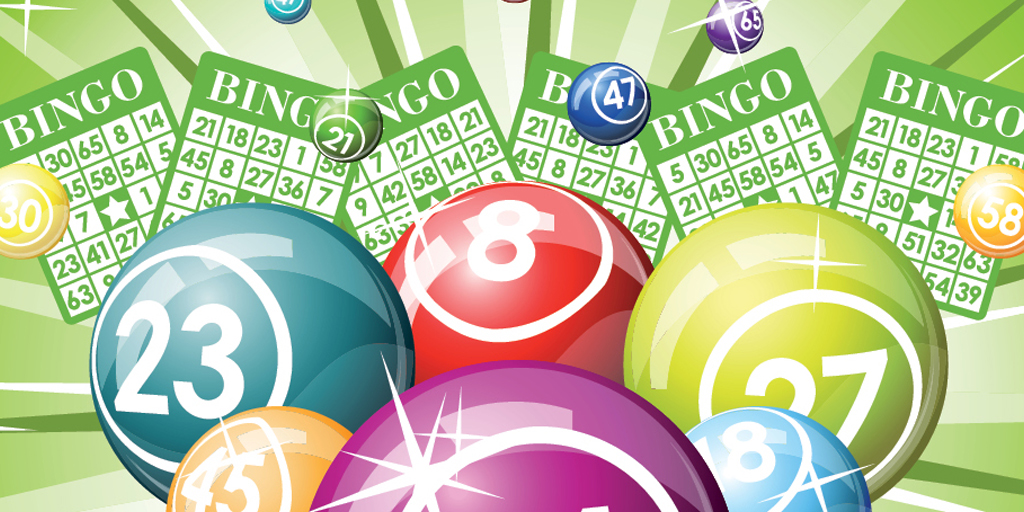
As many people know, earlier this year I changed jobs, switching from working nearly every day in the office to a new job that is fully remote. Occasionally, a friend will ask me how I like working remotely, or whether there is something I miss about going into the office. I tell everyone that most days I like working from home, but the one thing I miss about the office surprises everyone: the yearly Bingo games!
Normally I despise pure games of chance. I haven’t bought a lottery ticket in decades, I have never put money into a slot machine, and I got out of my weekly football pool as fast as I possibly could. But for some reason, the game of Bingo is an exception to that, and I am not sure why that is the case. It’s not like the game has been glorified in popular media; heck, I can’t think of one TV show or movie that prominently featured the great game.
After giving it some thought, I think the reason Bingo piques my imagination is because it’s a math game where the players don’t need to know any math. Maybe if I focused more on random strategy or good-luck charms, I would have had more success at the game, but let’s face it, the math is not only complex, but kind of fun as well. Hopefully my puzzle-solving friends can help solve these Bingo puzzles as I try to work up one or two more puzzle columns.
Note: In every puzzle below, feel free to assume that every ball drawn is completely uncorrelated and random, with each of the 75 balls equally likely to get selected. Also feel free to assume that each Bingo card is a 5 × 5 square, where the first column consists of five random numbers between 1 and 15, the second column consists of five random numbers between 16 and 30, etc. As always, the middle Bingo square is free. The first person to get five in a row—across, diagonally, or vertically—wins.
- What is the probability that someone gets Bingo after exactly four balls are drawn, the fewest number of balls possible, to win?
- What is the probability that someone gets Bingo after exactly five balls are drawn?
- What is the greatest number of balls that can be drawn without your card have a winning Bingo?
- What is the probability that after exactly four balls are drawn, you will have drawn all four corners of your Bingo board?
- If 10 co-workers play a game of “Blackout,” where the winner must not just get five in a row but cover all 25 squares of the Bingo board, what is the probability that there will be a winner by the 60th ball drawn or sooner?
Solutions to Last Issue’s Puzzles—Pencil’s Down
- If 3x + 4y = 5, then what is 27x × 81y? Note that 27x × 81y = 33x × 34y = 3(3x+4y). But we know that (3x+4y) = 5, so the solution is just 35 = 243.
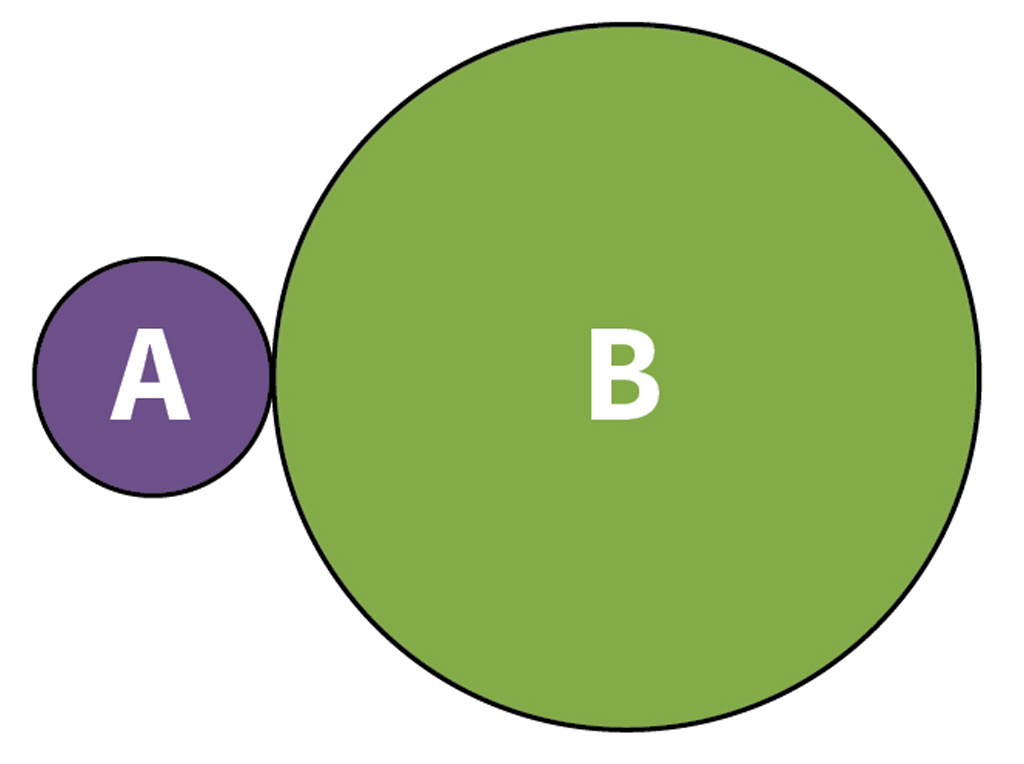
2. If circle A of radius 1 rolls around circle B of radius 3, how many times will circle A revolve? Here circle A revolves around a path that is a radius of 4, the sum of the radii of circle A and circle B. As the circumference of this circle is 8 × Pi, and circle A has a circumference of 2 × Pi, dividing the two leads to an answer of four revolutions. Note: This is the famous SAT problem where no correct solution was given of the five multiple choice options.
3. If 168 people wait in line every hour, and the average shopper spends five minutes in line, how many people are on line on average? Following the formula N = rT, T = 5, and N = 168/60 (as there are 60 minutes in an hour). So the answer is simply 5 × (168/60) = 14. So 14 people are waiting in line on average.
Solvers: Al Spooner, Anna Quady, Anthony Salis, Bill Feldman, Bob Conger, Clive Keatinge, Daniel Wade, David Lueck, David Promislow, Deb Edwards, Jason Shaw, Jerry Miccolis, John Vrysen, Michael Schachet, Rui Guo, Sam Ellis, and Tony Pistilli