
Editor’s Note: This article is the first in a two-part series marking America’s 250th anniversary. It explores the key legal, technological, and political turning points that shaped the early development of the American insurance system. Part II will examine how modern innovations transformed the profession and the management of risk.
As the United States celebrates its 250th birthday, key legal decisions, technological breakthroughs, and political battles reveal how insurance evolved alongside the nation itself.
By James Lynch

The United States is celebrating its 250th birthday this July, and insurance has shaped—and been shaped by—the nation’s economic, political, and technological evolution.
In this two-part series, we highlight some turning points in the history of insurance in the United States. It’s not meant to be a comprehensive history; we’re highlighting moments that, as an underwriter might say, serve as proximate cause—the “but for” moments that triggered a chain of events leading to some aspect of modern insurance.
We talk about the lawsuit that codified state regulation; the moment the United States almost plunged into universal health insurance; the legislation signed by former President Theodore Roosevelt that made some sort of pension implicit in the social contract; and the technological and product innovations that turned actuarial science from mathematical arcana into an operational necessity for insurers.
We’ve also tried to cover the practice areas that are the focus of the American Academy of Actuaries: health, life, casualty, retirement, and risk management.
You might notice that most of the events discussed here occur after about 1900. That’s not because insurance didn’t exist before that. You can find risk management concepts going back to the Code of Hammurabi of nearly four millennia ago (which describes marine loans that were canceled if the ship sank) and the Old Testament (Joseph’s grain-storage strategy would sound very much like modern risk management).
Insurance companies were a critical part of the War for Independence. Historian Hannah Farber argues that revolutionary-era marine insurers were essential to building the early nation.1 Good marine underwriters had to understand the political risks in the ports where their insureds docked, and they shared this information with the Founding Fathers. They helped negotiate foreign loans and sell state debt, and they invested capital in federal debt and American businesses.
Farber’s book focuses on America’s first 50 years, but insurers never stopped doing much of what she described: protecting first financial assets like ships and buildings, later lives and longevity, and investing in the promise of a growing republic.
We don’t focus much on those early moments. For the first 125 years of the Republic, insurance and risk management were establishing themselves through a series of firsts—the first fire insurer, the first actuary, the first state insurance department, and more. We’ve listed those in a separate timeline (see “Firsts in the Actuarial World” below).
Instead, we zoom in on pivotal moments that helped make insurance and risk management into the critical industries they are today.
Part I looks at several foundational developments that shaped modern insurance practice. In Part II, in the next issue of Contingencies, we will explore later turning points that transformed the profession in the late 20th century and beyond.
Insurance Is “Not Commerce” (1869)
The Constitution gives Congress the power “to regulate Commerce with foreign Nations, and among the several States….”
What that meant when the Constitution was written—specifically the word commerce—has given American insurance its unique regulatory structure.
The Oxford English Dictionary will tell you that the “-merc-” in the word commerce refers to merchandise—which would make the Commerce Clause of the U.S. Constitution apply only to the physical exchange of goods: “Here’s some money; where is my stuff?”
Courts slowly embraced the idea that commerce could involve services, too. For example, the Supreme Court ruled in 1824 (Gibbons v. Ogden) that commerce included steamboat travel across state lines: 2 “Here’s some money; take me to New Jersey.”
But what about a person in one state buying fire insurance from a company in another state? “Here’s a little bit of money; give me a lot of money if my building burns.” Is that commerce? No goods change hands, and no explicit service is performed.
States were the first insurance regulators, and they often treated in-state companies better than out-of-state and international insurers.3 Virginia, for example, passed a law in 1866 requiring non-Virginia insurers to deposit a bond with the state Treasurer—between $30,000 and $50,000.
New York insurers believed this was unconstitutional. First, it seemed to violate the Privileges and Immunities Clause, which prevents one state from discriminating against the residents of another state. Second, it seemed to regulate interstate commerce, which was Congress’ job.
They created a test case. Virginian Samuel Paul applied to be an agent but didn’t post the required bond. The state denied his application; he sold a policy anyway. He was fined $50.
His appeal reached the Supreme Court.
- Ruling 1: The insurers were corporations, and corporations were not people. A state could discriminate against out-of-state corporations.4
- Ruling 2: “Issuing a policy of insurance is not a transaction of commerce.” The buyer isn’t getting merchandise or a steamboat trip. They are entering into a contract that is absent goods or services. Insurance policies, the court said, “are like other personal contracts between parties which are completed by their signature and the transfer of consideration.”5
Conclusion: Insurance was not commerce, and therefore not subject to federal regulation.
From this ruling, insurance’s unique, complex regulatory environment grew. States regulate insurance, and the National Association of Insurance Commissioners coordinates those efforts. The federal government plays a minimal role.
The system might seem cumbersome, but it eventually became revered. When the Supreme Court partially reversed Paul in 1944 and thrust the regulatory structure into peril, Congress acted quickly. In just two months, as the final battles of World War II raged, the McCarran-Ferguson Act was passed “to preserve to the states the power to regulate but to compel them to regulate more adequately.”6
President Franklin D. Roosevelt signed the bill on March 9, 1945. He died five weeks later.
The decision in Paul v. Virginia cemented a regulatory structure that still defines the American insurance industry today. But regulation alone did not determine the future of insurance. Equally important were innovations that transformed how risk itself could be measured and analyzed.
One of the most consequential of those innovations emerged from an unlikely place: the U.S. Census.
Punch Cards and the Rise of Insurance Data (1889)
The mathematical theory of life insurance was worked out well before data collection was good enough to make life tables reliable.
There were tables going back to Roman times (Ulpian’s table from the third century C.E.), and in 1693 Edmond Halley—the comet guy—published a mortality table based on records from Breslau, Silesia (now Wroclaw, Poland).
There were early American attempts. The Wigglesworth table, published in 1789, drew on records from 10 towns in New Hampshire and Massachusetts. In 1814, the Pennsylvania Company for Insurances on Lives and Granting Annuities—the first U.S. company organized solely to issue life insurance policies and annuities—published a mortality table based on records from the Episcopal Church and the local Board of Health. The company built on earlier American insurance traditions, including the Presbyterian Ministers’ Fund, founded in 1759 as the first life insurer in the colonies.7
Before 1850, though, American insurers mainly relied on an 1816 table taken from records in the British town of Carlisle.8 They would tweak these based on local data, but more often rates were adjusted for competitive reasons.9
Data collection was laborious and inconsistent through most of the 19th century. In 1880, for example, U.S. Census workers traveled across the country on horseback to collect information that took 7½ years to publish.
Census worker Herman Hollerith witnessed that inefficiency firsthand. A decade later, the Census used his new system—a machine reading punch cards—to cut processing time by two-thirds. The government saved $5 million.10
Hollerith didn’t invent the punch card: The Jacquard loom used punch cards to weave complicated images into cloth. Hollerith, inspired by a train conductor punching tickets, made the punch card the backbone of data collection.
In 1890, census data was punched onto 60 million cards, one per person. They were fed manually into Hollerith’s tabulation machines, which were adorned with rows of clock-face dials that registered how many times a particular hole was punched. The process was “at least ten times faster than manual methods.”11
The system had a side benefit, crucial to insurers: It was now easy to calculate cross-tabulations. A separate sorting machine recorded how many times certain hole combinations appeared. So the Census told you not only how many people lived in the United States, but also how many were, say, married farmers over 40 years old.
Actuaries immediately saw the value. In 1890, 25 members of the Actuarial Society of America saw a demonstration—the beginning of what business historian JoAnne Yates called “a decades-long interaction between the punched-card tabulating industry and the life insurance industry.”12
In 1910, the Actuarial Society of America and the Association of Life Insurance Medical Directors used Hollerith’s technology to create life tables. It wasn’t the first multi-company study, but because Hollerith’s system was near ubiquitous by then, it was easy to submit data.
It was also easy to verify accuracy. Companies submitted two sets of cards, and data checkers would hold a card from each set up to the light and look for holes.
The market for punch-card systems grew. Competitors emerged, primarily J. Royden Peirce and James Powers. All sought to gain prominence with insurers, which of course were enormous organizations with enormous data needs.

The Powers Accounting Machine Company eventually became a division of data-processing giant Remington Rand Inc. Hollerith hired Peirce, and his company became the core of IBM.
The technology made large-scale statistical analysis practical for insurers. For the first time, massive datasets could be processed systematically, allowing actuaries to refine mortality tables and improve pricing accuracy.
Yet while technology was making insurance more scientific, political forces were simultaneously reshaping debates about who should bear risk in society.
The Push for Universal Health Insurance (1916)
Caught up in the tidal wave of Progressive-era social insurance movements, the American Medical Association (AMA) may have brought the nation as close as it ever would come to government-sponsored universal health insurance.
As the world industrialized in the late 1800s, millions left farms to join the mechanized work force. Labor saving devices made them more productive—but at a horrid cost, with thousands maimed and killed.
In response, Germany in the 1880s created an umbrella of protections, including health insurance and workers compensation. Other nations followed.
In the United States, some workers had for decades gotten health insurance through their trade union, if they belonged to one. The tradition dates back to at least 1796, with the founding of the Mutual Assistant (sic) Society of Hair Dressers, Surgeon Barbers, Etc. (Healthy barbers would take on for free the work of sick brethren.)13
These evolved into a network of voluntary funds. They petered out by the 1950s, but in the early 1910s they remained viable.
The fervor behind the new social insurances was considerable. In 1912, former President Theodore Roosevelt ran on a universal health plan under the Bull Moose ticket.14
That same year, the American Association for Labor Legislation created a multiyear strategy to adopt universal health care state by state. Several states were immediately interested. New York’s bill, introduced in 1916, drew the most attention.
It didn’t pass, but something seemed likely to pass soon. The AMA worked with Progressives to tailor the bill’s 1917 version.
One reason: money. Many doctors struggled financially, physicians in particular. Wealthier patients often used specialists, and physicians saw a large number of charity cases. An AMA council reported that barely 10% of physicians in 1913 “are able to earn a comfortable income.” In a universal plan, the state would guarantee a steady income.
At the end of the year, the AMA’s Social Insurance Committee endorsed compulsory, state-run insurance.
But the AMA was out of touch with its membership. Less than a year later, boards in several New York counties, including New York (Manhattan), Livingston, Monroe, and Erie, all formally objected.
Many doctors were convinced—with little evidence—the state-run insurer would cap their income at $2,000. (Average annual income then was about $1,200.) And by 1917, the United States was at war with Germany. All German things were, well, verboten, including universal health insurance.
Even as the AMA backed away—its formal vote occurred in 1920—support for the idea was collapsing.
Labor leader Samuel Gompers, for one, preferred having unions negotiate health benefits. California held a referendum in 1918. More than 70% voted against. In 1919, a survey of 13,000 factory workers in Utica, New York, found that only 1% favored the New York plan.
The New York Senate did pass a universal health insurance law that year. It was doomed. The leader of the state’s other legislating house, the State Assembly, made sure it never came up for a vote.15
New York provided the movement its only (partial) victory. Writes historian John E. Murray: “Why a movement that was so successful in workmen’s [sic] compensation and industrial safety failed so consistently with health insurance has puzzled observers ever since.”
Turning Points
The moments described here represent a turning point in how the United States approached risk. The Paul v. Virginia decision defined who would regulate insurance. Hollerith’s punch-card machines helped make actuarial science practical at scale. And the Progressive-era health insurance movement revealed how deeply insurance policy is intertwined with broader social debates.
In Part II, we move forward in time to explore how late-20th century innovations—from spreadsheets to retirement savings plans to enterprise risk management—transformed the actuarial profession and expanded its role in the modern economy.
Firsts in the Actuarial World
Key milestones and trailblazers that marked some of the firsts in American actuarial history:
1735: In South Carolina, The Friendly Society becomes the first insurer established in the American colonies. It goes out of business by 1740.
1752: The Philadelphia Contributionship for the Insurance of Houses from Loss by Fire, the oldest carrier continuously operating in the United States, is established.
1759: The Presbyterian Ministers’ Fund, the first life insurer in the American colonies, is founded.
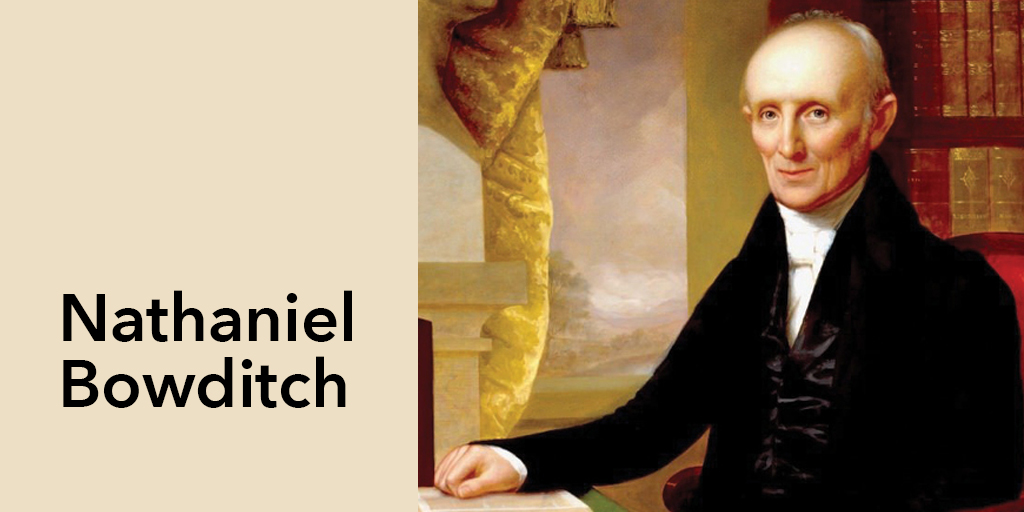
1804: Nathaniel Bowditch becomes the first person in the United States to hold the title of actuary.
1809: Jacob Shoemaker becomes the first practicing company actuary.
1858: Actuary Elizur Wright of Massachusetts becomes the first state insurance commissioner.

1871: The National Association of Insurance Commissioners (NAIC) is founded.
1889: The Actuarial Society of America is founded.
1895: Emma Warren Cushman becomes the first woman member of the Actuarial Society of America.
1905: New York’s Armstrong investigation reveals sordid and corrupt insurance practices, leading to collective rate-setting and greater protections for life insurance policyholders.
1909: The American Institute of Actuaries is founded.
1911: 146 people, mostly young women, die in NYC’s Triangle Shirtwaist Factory fire, which becomes the catalyst for establishment of workers’ compensation across the United States.
1914: The Casualty Actuarial Society is founded.
1914: In German Alliance Insurance Company v. Lewis, the Supreme Court rules that states may regulate insurance rates.
1930: Esther Tibbs becomes the first Black actuary.
1949: The Actuarial Society of America and the American Institute of Actuaries combine to form the Society of Actuaries.

1965: The American Academy of Actuaries is founded.
1968: The NAIC requires that life company annual statements be signed by a qualified actuary.
1971: The Borel v. Fibreboard decision triggers tens of billions of dollars of asbestos losses.
1975: Life actuaries signing annual statements are required to render an opinion.
2017: Principles-based reserving standards are implemented.
James Lynch, MAAA, FCAS, is a retired property/casualty actuary in New Jersey who writes articles on insurance history and financial matters.
Endnotes
- Hannah Farber, “Underwriters of the United States,” The University of North Carolina Press, n.d., accessed Feb. 22, 2026.
- “Meaning of Commerce | Constitution Annotated | Congress.Gov | Library of Congress,” accessed March 25, 2026.
- This acted as a barrier to entry and helps explain why European companies focused on reinsuring U.S. business until well into the 20th century.
- After Paul broke the law (1866), but before the Supreme Court decision (1869), the 14th Amendment was adopted. It guaranteed that enslaved persons were citizens, and corporate lawyers quickly argued it also meant that corporations were people, too. The Supreme Court adopted that position in 1886 with Santa Clara County vs. Southern Pacific Railroad Company [118 U.S. 394].
- Paul v. Virginia, 75 U.S. (8 Wall.) 168 at 183 (1869) (Supreme Court).
- Spencer L. Kimball and Ronald N. Boyce, “The Adequacy of State Insurance Rate Regulation: The McCarran-Ferguson Act in Historical Perspective,” Michigan Law Review (Ann Arbor, MI) 56, no. 4 (1958): 545–78.
- Charles Kelley Knight, “The History of Life Insurance in the United States to 1879, with an Introduction to Its Development Abroad” (University of Pennsylvania, 1920), p. 78.
- “Popular Science Monthly/Volume 19/August 1881/Origin and History of Life Insurance I – Wikisource, the Free Online Library,” accessed March 24, 2026.
- Knight, p. 79.
- “Count Me In,” Text, United States Patent and Trademark Office, accessed March 24, 2026.
- “Making Sense of the Census: Hollerith’s Punched Card Solution—CHM Revolution,” accessed March 24, 2026.
- JoAnne Yates, “Co-Evolution of Information Processing Technology and Use: Interaction between the Life Insurance and Tabulating Industries,” Business History Review (Boston, United Kingdom) 67, no. 1 (1993): 1.
- John E. Murray, Origins of American Health Insurance: A History of Industrial Sickness Funds, (Yale University Press, 2007).
- “Progressive Party Platform of 1912 | The American Presidency Project,” accessed March 30, 2026.
- Clifford Marks, “Inside the American Medical Association’s Fight Over Single-Payer Health Care,” Annals of Medicine, The New Yorker, Feb. 22, 2022.