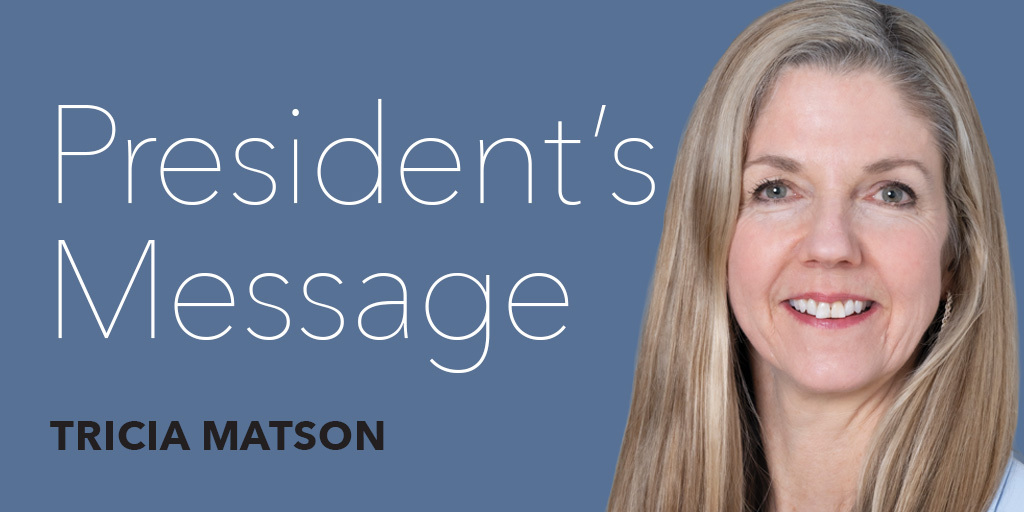
By Tricia Matson
Actuaries have long served as stewards of financial security—professionals who not only measure risk, but shape systems capable of withstanding it. From the earliest days of social insurance in the United States to today’s evolving geopolitical landscape, actuaries have played an essential role in designing, evaluating, and safeguarding promises that Americans rely on throughout their lives. As the country faces new uncertainties, the actuarial profession’s knowledge is more needed than ever.
The roots of these contributions can be traced back to the early 20th century, when the United States first began grappling with how to build national systems that could provide economic security for aging workers, unemployed families, and those struck by disability. During the development of the Social Security Act of 1935, actuarial insights were indispensable. Policymakers relied on demographic projections, mortality patterns, and economic modeling to craft a program intended to remain solvent across generations. The foundational principles of the system—risk pooling, intergenerational equity, and long-term funding discipline—reflect actuarial thinking at every level.
Over the decades, actuaries have continued to support the maintenance and evolution of America’s social insurance programs. Medicare’s creation in 1965 required complex assessments of health care utilization, longevity, and cost trends—challenges that have only intensified with an aging population. Today, the actuarial profession’s tools and frameworks remain central to evaluating the financial condition of these programs and identifying long-term sustainability issues before they become crises.

I had the pleasure of participating in the American Academy of Actuaries’ annual Hill visits this past March. It became clear to me from meetings with congressional offices that the Academy has become a critical provider of independent, nonpartisan expertise to lawmakers and regulators. In an era when public policy debates are often shaped by short-term considerations or ideological divides, the Academy’s work helps ensure that decisions affecting the financial security of millions are grounded in sound analysis.
Whether testifying before Congress, publishing issue briefs, or developing practice notes, the Academy consistently emphasizes the importance of long-term perspectives and quantitative rigor. On topics ranging from retirement income adequacy to Medicare solvency to stability of the insurance industry, the Academy’s contributions help clarify the tradeoffs inherent in policy proposals and highlight unintended consequences that might otherwise go unnoticed. Perhaps most importantly, the Academy brings a shared language of risk to policymakers, enabling them to weigh uncertainty more thoughtfully.
Today’s environment, however, presents another set of challenges. Geopolitical tensions are transforming global supply chains, reshaping capital markets, and introducing new forms of systemic risk. Rising cyber threats, political instability, climate-related disruptions, and shifting demographic patterns are converging in ways that create uncertainty not just for insurers and pension plans, but for governments, financial systems, and the general public.
Actuaries are uniquely equipped to help society navigate this uncertainty. Our core competencies—modeling complex systems, quantifying long-term risk, and assessing the resilience of financial structures—are directly applicable to current geopolitical risks. The profession can help organizations stress-test their assumptions, evaluate the impact of geopolitical scenarios on capital requirements, and assess the adequacy of safety net programs under alternative macroeconomic paths.
Actuaries can support policymakers by highlighting the long-term implications of geopolitical volatility for federal trust funds, private retirement systems, health care financing, and insurance markets. As governments confront the financial consequences of geopolitical shocks—from energy price spikes to migration pressures—actuarial analysis can help ensure that policy responses are both sustainable and equitable.
Ultimately, actuaries are not merely analysts—we are custodians of promises. Every pension check, every insurance benefit, and every Social Security payment reflects a commitment made today to provide security tomorrow. In times of uncertainty, the value of professionals who can evaluate the durability of those commitments becomes indispensable.
Amid a period of heightened geopolitical instability, actuaries have a unique opportunity—and responsibility—to help strengthen the financial foundations that support individuals, institutions, and society at large. By continuing to bring rigorous and fact-based analysis, long-term thinking, and a deep commitment to the public interest, actuaries can remain vital problem solvers for the financial security challenges of the 21st century.
Tricia Matson is president of the Academy.