Casualty VP Susan Kent Outlines Key CPC Priorities
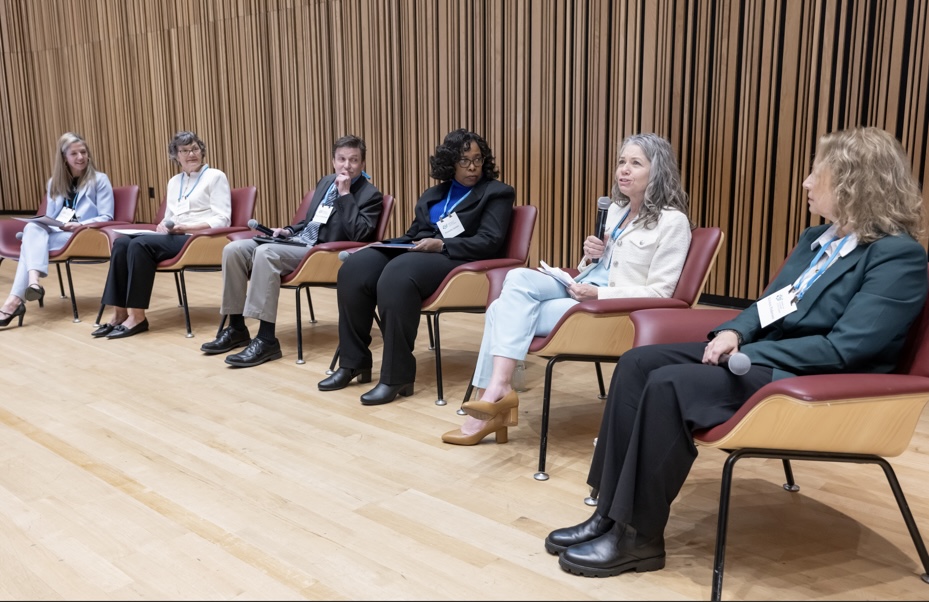
In a panel discussion moderated by incoming Academy President Tricia Matson at the 60th anniversary Leadership Summit and Governance Transition held Nov. 21 in Washington, the Academy’s six vice presidents outlined some of their key public policy priorities heading into 2026.
Casualty Vice President Susan Kent cited a number of emerging, longer-term Casualty Practice Council (CPC) priorities, emphasizing the need to ensure that actuaries use artificial intelligence (AI) ethically and professionally.
“We want to make sure that we’re empowering actuaries to use AI in a way that’s both professional and ethical,” Kent said, adding that the CPC had an “energetic discussion” prior to the summit about ensuring that the use of AI conforms with actuarial standards of practice (ASOPs).
“We want to educate actuaries in ways they can use AI,” including cost issues, and continue to inform policy through interactions with the NAIC, she added.
Other top issues for the CPC include affordability and availability of P/C insurance, which has been a particularly acute topic for elected officials, regulators, and industry recently due to the wildfires earlier this year in California and the fire in Lahaina, Maui, as well as the severe convective storms in the Midwest of late. Kent also cited the CPC Homeowners’ Insurance Task Force’s August letter to the NAIC on affordability as an example of how the practice area has prioritized talking about the issue with key stakeholders.
The CPC also continues to prioritize efforts to inform federal policy, with the June cross-practice letter to the National Oceanic and Atmospheric Administration (NOAA) on the importance of NOAA’s billion-dollar database that was subsequently sent to Congress in an effort to underscore the need for maintaining easily accessible, high quality data sources for actuaries, academics, and all levels of government agencies. Potential changes to the Federal Emergency Management Agency (FEMA) or the National Flood Insurance Program (NFIP) will remain high on the CPC’s priority list in 2026 due to the continuing need for robust flood insurance for consumers, Kent said.
Cross-practice issues also affect affordability—most notably in the case of health and property/casualty insurance—and informing policymakers and legislators about that is also important, a fact that several vice presidents emphasized during the conversation.
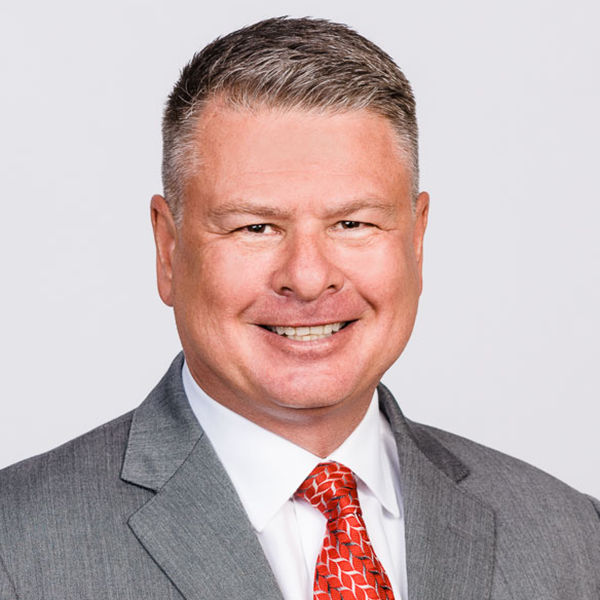
Academy Award Recipients Include Past Casualty VP Rade Musulin
Also at the summit, the Academy gave out its annual service and recognition awards. Read more about the recipients, and watch the awards presentation ceremony.
Farley Award—Past Casualty Vice President Rade Musulin (2017–2018) received the Jarvis Farley Service Award, a lifetime achievement award honoring a member whose volunteer efforts have made significant contributions to the advancement of the profession. Musulin’s nearly 25 years of Academy volunteer service stand as an extraordinary testament to his commitment to the U.S. actuarial profession.
OVA—Casualty volunteer Tyson Mohr was among those who received the Outstanding Volunteerism Award (OVA). Mohr was recognized for contributions as vice chairperson of the P/C Equity and Fairness Committee, for participating in the Academy’s engagement with NAIC subgroups, and providing valuable input on bias and fairness.
Rising Actuary Award—Casualty volunteer Scott Merkord, with Risk & Regulatory Consulting, was among the seven Rising Actuary Award recipients. Read more about the Rising Actuary Award recipients in the December Contingencies web exclusive, Movin’ on Up.
Academy Holds Successful P/C Loss Opinion Seminar
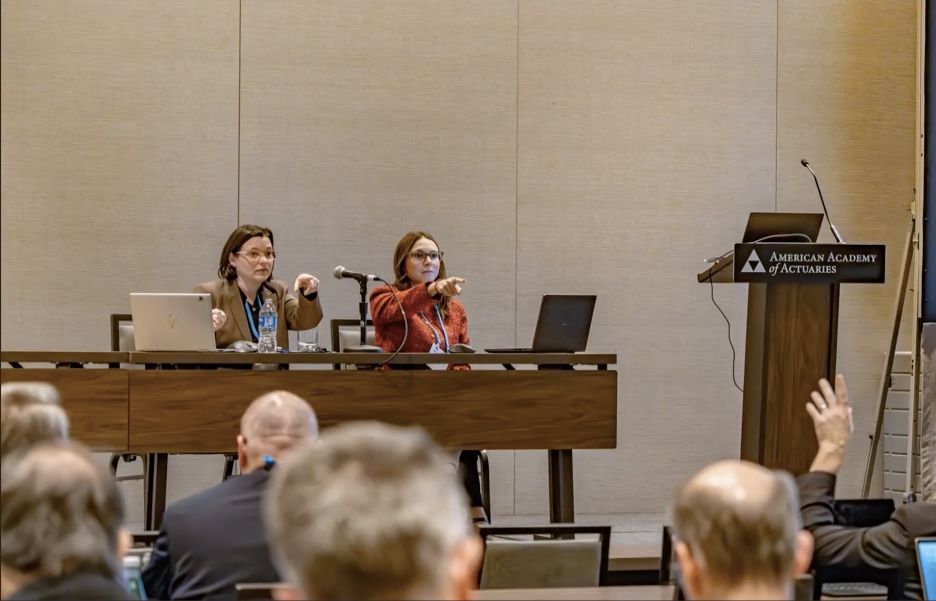
The Academy held a successful 2025 Seminar on Effective P/C Loss Reserve Opinions Dec. 8–9 in Salt Lake City. The seminar is designed for P/C actuaries who prepare statements of actuarial opinion (SAOs).
This year, a pre-seminar webinar was held for attendees, with Opinion Seminar Subcommittee members leading an introduction to SAOs on the event’s first day. That was followed by an introduction to qualifications led by subcommittee member Michelle Iarkowski. Other sessions covered Risk of Material Adverse Deviation (RMAD) and actuarial standards of practice (ASOPs).
Subcommittee member Sue Gozzo Andrews led an introductory session on regulatory perspectives, and subcommittee member Chuck Emma led a session on ranges, which was followed by an afternoon workshop led by multiple subcommittee members.
“No matter how many times you attend, you will always learn something new at the P/C Loss Opinion Seminar,” said Subcommittee Vice Chairperson Kayla Robertson, who is also the incoming chairperson. “Unlike some other continuing education opportunities, this event encourages active participation and discussion.
“This year’s engaged audience made working through attendee questions and workshop scenarios especially rewarding for the faculty who volunteer their time and expertise. Both the faculty and attendees serve as an incredible resource and sounding board for the issues at the forefront of an Appointed Actuary’s mind,” she said.
Academy Presents at NAIC Fall Meeting

Academy volunteers and staff presented at the NAIC Fall National Meeting in Hollywood, Fla., December 8–11, covering multiple practice areas, professionalism issues, and cross-practice policy issues, including artificial intelligence and risk-based capital model governance.
The Academy held a professionalism breakfast for regulators, and Academy President Tricia Matson, Actuarial Board for Counseling and Discipline Chairperson William Hines, Actuarial Standards Board Chairperson Kevin Dyke, and Committee on Qualifications member Linda Lankowski presented at the breakfast and to the NAIC actuarial task forces, including the Casualty Actuarial and Statistical (C) Task Force (CASTF).
Academy Senior Casualty Fellow Rich Gibson provided an update on CPC activity to CASTF, and Director of Research Steve Jackson gave a short comment during NAIC’s Property and Casualty Insurance (C) Committee meeting on behalf of the CPC’s Homeowners’ Insurance Task Force. Jackson also gave a Title Insurance Research Update to the NAIC’s Title Insurance (C) Working Group.
Briefing, Blog—For more, watch a post-NAIC briefing video and read an Actuarially Sound blog post on the meeting.
Cyber Risk Toolkit Updated
The latest update to the Cyber Risk Toolkit, a revision of the Personal Cyber: An Intro to Risk Reduction and Mitigation Strategies issue brief, identifies some of the penetration points of cyberattacks from an individual’s perspective and examines how individuals can minimize their risk of being hacked.
Webinar Covers Cyber Issues—The Committee on Cyber Risk held its annual webinar on cyber issues on Oct. 29 at the end of Cybersecurity Awareness Month. Presenters included outgoing Chairperson Wanchin Chou, incoming Chairperson Sam Tashima, and other committee members, who discussed additions to the Cyber Risk Toolkit, updates on the cyber insurance market, and related issues. Watch a replay on Academy Learning.
Academy Presents at CAS Annual Meeting
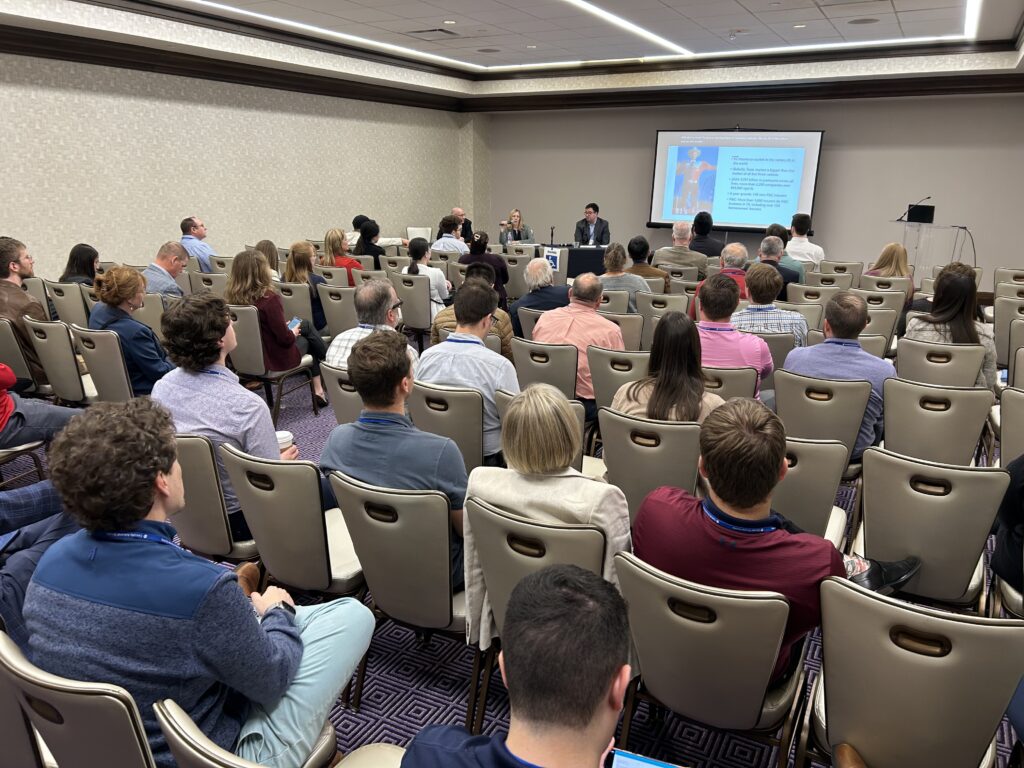
Volunteers and staff attended and presented at the Casualty Actuarial Society (CAS) annual meeting, Nov. 9–12 in Austin, Texas. At the meeting, outgoing President Darrell Knapp and CEO Bill Michalisin shared Academy updates, CPC priorities, and discussed collaboration opportunities with the CAS Board.
Casualty Policy Project Manager Rob Fischer and Senior Casualty Fellow Rich Gibson were joined by Nicole Elliott, chief actuary for the Texas Department of Insurance’s Property and Casualty Division, in presenting a 2025 Public Policy Update—an overview of CPC activity, regulatory activities from the NAIC, and general P/C policy priorities.
CPC members also participated in eight sessions on a variety of topics, and Academy staff were onsite to encourage CAS members to pursue the MAAA designation and to answer other membership questions at the Academy’s booth.
SOA ImpACT Conference
Academy staff and volunteers also attended the SOA ImpACT Conference, Nov. 2–5 in Seattle. Climate Change Committee Vice Chairperson Peter Ott and committee member Daniel Pribe presented at a climate-data session moderated by Rebecca Owen, also a committee member. Owen also moderated a session on climate and insurance affordability featuring a presentation by Washington state Insurance Commissioner Patty Kuderer.
Dues Reminder—Is Your Academy Profile Up to Date?
Before the end-of-year rush, please take a few minutes to make sure your Academy member information is up to date. Here are a few things to check in your member profile:
Dues—Have you paid your 2026 member dues? Dues need to be paid by Jan. 1 to start the new year as a fully paid-up Academy member. Read Academy President Tricia Matson’s letter to members.
Employment—Have you changed jobs? Check that your contact information reflects your new role and any addresses (email and/or mailing address) are accurate.
Credentials—Have you gained a new credential? Congratulations! Please take a few minutes to update your profile to reflect your achievement. Log in to your member profile today.
ICYMI: Membership Webinar—In case you missed it, the Dec. 17 webinar, Maximize Your Membership: A Comprehensive Guide to Making the Most of Your Academy Experience, featured Academy staff who highlighted the value of your membership. Watch a replay on Academy Learning.
Webinar Covers Commercial Markets
The CPC’s Commercial Liability Task Force held a Dec. 2 webinar, Commercial Liability Survey of the Market, featuring Chairperson Bill Finn as moderator, Vice Chairperson Dawn Fowle, and other task force members. Presenters shared highlights from a soon-to-be published paper and discussed other challenges facing the commercial market.
Read more—See a Q&A with Finn and Fowle in the Summer Casualty Quarterly, and watch a replay on Academy Learning.
Academy Presents to CAS Mid-Atlantic Affiliate
Casualty Vice President Susan Kent presented the professionalism session at the Casualty Actuaries of The Mid-Atlantic Region’s meeting Dec. 4 in Merion Station, Pa. In “Professionalism Update from the Academy,” she covered developments with actuarial standards of practice (ASOPs), ABCD inquiries and requests for guidance, and a reminder of the Academy’s new membership requirements for new members that take effect Jan. 1.
Highlights From
Casualty Quarterly

Prefer to watch your news? Check out this “Highlights From Casualty Quarterly” video for a quick recap of what you need to know.
P/C Law Manual Available for Preorder
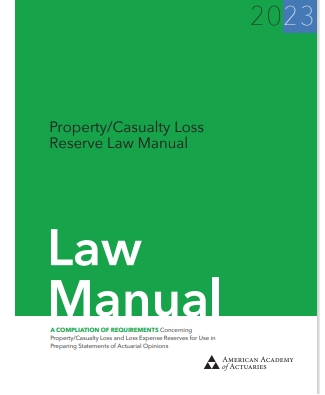
The P/C Loss Reserve Law Manual, designed to help appointed actuaries know the NAIC requirements for annual statements of actuarial opinion, is available for preorder. It contains a compilation of insurance laws relating to P/C loss and loss expense reserves for all 50 states, Puerto Rico, and Washington, D.C. Place your preorder today
COPLFR P/C Practice Note
Also coming soon, look for the annual Committee on Property and Liability Financial Reporting (COPLFR) practice note on statements of actuarial opinion.
Feb. 4 P/C RBC Webinar
And, mark your calendar for a Feb. 4 webinar that will discuss P/C risk-based capital issues.
Academy in the News
PropertyCasualty360’s “Around the P&C Insurance Industry” noted past Casualty Vice President Rade Musulin’s receipt of the Academy’s Jarvis Farley Service Award.
At the conclusion of Cyber Risk Awareness Month (October), a subscriber-only Law 360 story covered the Academy’s extensive work in this area based on a briefing by Committee on Cyber Risk incoming Chairperson Sam Tashima.
An Agence France-Press story appearing on France 24 and nearly 100 other international and domestic news outlets highlights the Academy’s comments on the vital role of the National Oceanic and Atmospheric Administration’s Billion-Dollar Database that was discontinued earlier this year.
Legislative/
Regulatory Activity
Federal
The Federal Crop Insurance Corporation implemented significant amendments to improve crop insurance policies. Key changes include expanded benefits for beginning farmers and ranchers, who will receive additional premium subsidies for up to 10 crop years, with increased support in the initial years.
Several House lawmakers recently introduced bills related to the National Flood Insurance Program (NFIP), including:
HR 5484, sponsored by Rep. Frank Pallone of New Jersey, which reauthorizes the NFIP through 2030 while limiting annual cost increases for flood insurance premiums and establishing a means-tested assistance program to provide discounts for eligible low-income policyholders.
HR 5577, offered by Rep. Andrew Garabino of New York, which reauthorizes the NFIP through Sept. 30, 2026.
HR 5961, sponsored by Rep. Doug LaMafia of California, which amends the NFIP by enhancing the availability of flood insurance for agricultural structures by allowing local zoning authorities to grant variances from flood elevation or floodproofing requirements for agricultural structures in special flood hazard areas, based on the impracticality of compliance.
HR 5608, offered by Rep. Greg Steube of Florida, which allows “write your own” companies to sell private flood insurance and compete with the NFIP in an effort to encourage consumer choice in the flood insurance market.
State
New York Gov. Kathy Hochul signed A 4404/S 5331, creating an online insurance verification system for motor vehicle insurance in order to enhance the verification of motor vehicle liability insurance and improve compliance with insurance laws.
New Jersey Gov. Phil Murphy signed S 2783, which mandates that travel insurers pay a premium tax on travel insurance premiums for state residents.
In October, California Gov. Gavin Newsom signed the following:
AB 1339, which mandates that the Department of Insurance conduct a study focusing on the insurance industry’s impact on the challenges faced by affordable housing entities in California regarding property, liability, and builders’ risk insurance.
AB 1398, which outlines amendments to the state labor code that focus on enhancing transparency in workers’ compensation, particularly concerning the disclosure of financial interests in medical referrals.
SB 547, which prohibits insurers from canceling or refusing to renew policies solely based on a property’s location within or adjacent to fire perimeters for one year following a declared state of emergency due to wildfires.
SB 429, which establishes the Wildfire Safety and Risk Mitigation Program in California, aiming to fund the development of a public wildfire catastrophe model and significantly influence underwriting and risk assessment related to wildfire hazards.
AB 888, which creates the California Safe Homes grant program to reduce wildfire losses and enhance the resilience and insurability of vulnerable communities by prioritizing funding for home hardening measures, such as roof replacements and the establishment of noncombustible zones around structures.
SB 495, which includes new reporting requirements that mandate large insurers submit annual reports detailing their reinsurance programs and the use of probabilistic catastrophic models starting March 1, 2026.
AB 234, which requires all insurers licensed to write basic property insurance to participate in the California FAIR Plan Association, which aims to ensure equitable access to coverage for individuals who cannot obtain it through traditional means.
SB 525, which amends the California Insurance Code to expand the definition of “basic property insurance” to include coverage for manufactured homes and mobile homes so they can be insured under the same terms and conditions as other residential dwellings.
AB 226 allows the California FAIR Plan Association, a joint reinsurance organization, to request that the California Infrastructure and Economic Development Bank issue bonds aimed at financing claims-related costs and enhancing liquidity to address property insurance availability in the state.
AB 1, which outlines new regulations for residential property insurance in California, focusing on wildfire risk mitigation, by requiring the Department of Insurance to review and potentially update regulations by Jan. 1, 2030, and every five years thereafter.
SB 291, which focuses on workers’ compensation insurance requirements for contractors in the construction industry and penalizes contractors who fail to maintain workers’ compensation coverage, with specific amounts varying based on the type of business entity.
SB 371, which reduces the required uninsured and underinsured motorist coverage for transportation network companies (TNCs) from $1,000,000 to $60,000 per person and $300,000 per incident, making TNCs solely responsible for maintaining the coverage.