By Katie Dzurec
Director, Public Policy State Outreach
In my role at the Academy, I focus primarily on state outreach. That means I’m always looking at how we can better position and amplify the work of our practice councils in front of external stakeholders, like the NAIC, state legislators, and other groups that are just as interested in public policy at the state level as we are.
Recently, I had a front row opportunity to showcase some of the latest Academy work and—even better—to get feedback on how the Academy’s work in creating the Health Insurance Market Dynamics Resource Guide has immediate applications and implications for the very people that we’re looking to influence, educate, and engage.
I was invited to speak at AHIP’s annual State Issues Retreat, held in Nashville the first week of October. AHIP’s annual retreat is a unique gathering of health plan members, AHIP-retained counsels, and state trade association executives—people who are active in the health insurance space. The retreat gives attendees from across the country an opportunity to share new ideas and best practices, to learn from each other as well as from subject matter experts, and to think about how to craft messages to policymakers. This year’s agenda covered topics such as emerging trends, prior authorization, and the effect of H.R. 1, also known as the “One Big Beautiful Bill Act,” on Medicaid programs.
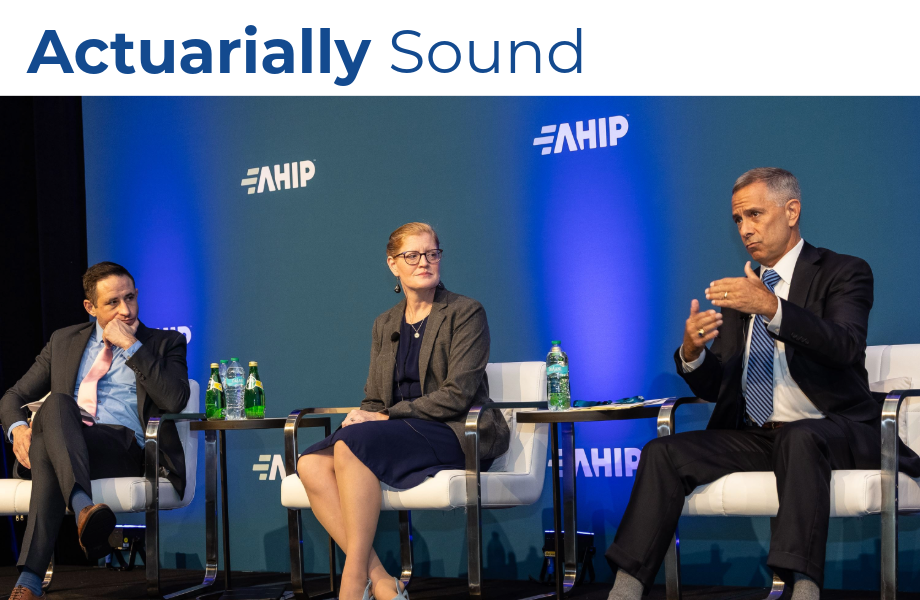
During a session on hot topics in commercial and individual markets, I joined two other panelists to share insights on what went into health insurance premium decisions for Plan Year (PY) 2026 and what the audience may want to keep in mind as actuaries and health plans look to price products and work with employers, consumers, legislators, and regulators to develop strategies for PY 2027 and beyond. As we prepared to go on stage, one of the panelists thanked the Academy for publishing the resource guide and announced to the room that he intended to use it as the centerpiece of an upcoming discussion with policymakers.
Ultimately, the attendees were looking for tips on how to present vital information in a way that communicates the complexity of the issues related to premium development and the interconnectedness of the under-65 health insurance marketplace. They are all looking for better ways to help promote the need for change and encourage consideration of proposals in a holistic way.
On behalf of the Academy, I emphasized reminding state legislators, regulators, and others who make decisions about coverage policies and access to insurance that none of these decisions operate or are implemented in a vacuum. Good or bad, choices will have a ripple effect on coverage. Laws and regulations change things; that is what they are intended to do. Any new law or change in regulation will inevitably have an impact, whether it shifts or modifies an established process, creates pressure or influences established timelines, or contains the possibility to fundamentally alter the components of product and rate development.
Even more importantly, it’s paramount to remember that while some great ideas may have served some states well, they might not work in other places. That’s one of the inherent pros and cons of a state-based system—once you’ve seen a single state, you’ve seen a single state. Health insurance is an incredibly local product—depending heavily on the specific population needs in that state and the expectations that each individual state establishes for itself, independent of the federal system and its neighbors.
What did the audience take away from the panel I was on in Nashville? I hope they left the retreat knowing that every state is different when you get into the details, but that every state has some level of cross-market interconnectedness. Also, that market stability is the foundation of affordability, competition, and consumer access. And finally, that policy decisions matter and need to happen early in the timeline of premium development if the goal is to have a shorter-term impact on affordability for consumers.
The Health Practice Council (HPC) has been sharing the health resource guide with a variety of key audiences, including the NAIC, NASHP, and NAMD. To find out more about the HPC’s activities, check out the council’s page on the Academy’s website. For even more information on our public policy priorities, visit the Academy’s Policy Forum.