
By Ted Gotsch
Far from the world of lobbying, the Academy helps shape public policy by offering independent, actuarially grounded insights on complex issues-from retirement security and insurance affordability to climate risk and emerging technologies. Through the work of its volunteers, it helps policymakers at all levels address today’s challenges with clarity, credibility, and long-term perspective.
The intersection of public policy and the work of actuaries is familiar territory to most Academy members. But for many outside the industry-particularly those who work on policy issues at the federal and state levels-the connection between the two might seem a bit of a head-scratcher.
How could these professionals who meticulously follow numeric outcomes related to casualty, finance, health care, life insurance, and retirement issues be involved in the policy world, where negotiation and compromise are essential to the process?
The answer is they are not, at least not in the conventional way most think about policymaking. Public policy tends to evoke images of lobbying, where people in suits wine and dine elected officials, trying to pass legislation or influence decisions that benefit their company, their industry, or some segment of the population. Our members know that the Academy is not in the lobbying business. Instead, we inform and educate lawmakers, regulators, and their staff by providing actuarial analysis and application of actuarial principles and insights through the work of our volunteer committees presented in scores of publications, webinars, events, and presentations we produce each year. Instead of lobbying for a solution, we provide information that helps the decision makers better understand the issues, supporting an informed decision and optimal solution for the public.
Academy members-with their expertise in risk assessment, financial modeling, data analytics, and long-term forecasting-offer objective analysis that is essential for tackling complex and pressing policy challenges. Their involvement is especially critical in areas where long-term financial security, demographic shifts, and emerging risks intersect-including aging and fiscal security through the lens of public programs; private retirement savings; the shifting affordability of insurance products; how climate change affects personal health, personal property, and community solvency; and the impact and influence of technology innovations such as artificial intelligence (AI) and cybersecurity.
Public policy decisions-whether made in state legislatures or federal agencies-can have far-reaching consequences for financial systems, insurance markets, and consumers. The Academy plays a unique and vital role in this by offering objective, actuarially grounded insights that support effective regulation and sound policymaking. What follows is a look at how the Academy engages across the policymaking spectrum at the federal and state levels, and through cross-
practice initiatives.
Federal Efforts
One of the most visible ways the Academy engages with elected officials and shares our members’ expertise with federal lawmakers is through our annual Hill visits, which we hosted this past April.
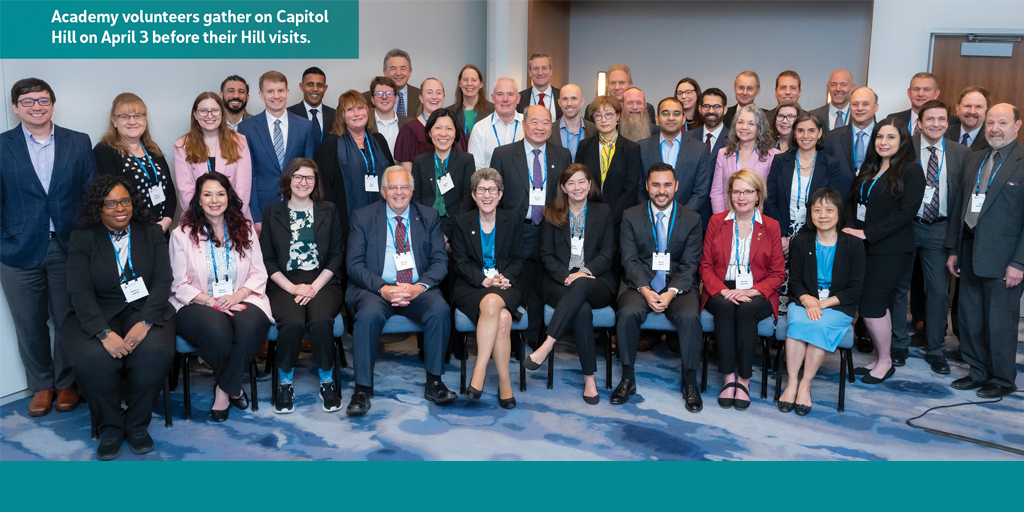
Some 40 members, accompanied by Academy staff, participated in more than 30 Capitol Hill visits, sharing their nonpartisan professional perspective with both congressional committees and individual staff. Academy members represented all five practice areas, emphasizing priority issues such as Medicare, Social Security, climate events, lifetime income, AI, and more.
“Hill visits are really important because they begin a conversation with the people that we want to interact with,” Academy President Darrell Knapp said. “It’s not expecting to walk out of the Hill visit with any sort of firm conclusion or ‘Hey, we scored this big win.’ It is about starting a conversation with a number of influential representatives and their staffers while reinforcing the value an actuarial perspective and the Academy’s role delivering it.”
This year’s event brought some changes to the annual visits. For the first time, members from all practice areas participated at the same time, resulting in a more concentrated and coordinated visit than in years past. It also facilitated a cross-practicearea perspective, bringing members together to engage on broader policy issues and share the experience with both new and longtime colleagues and friends.
As the Academy continues to focus on broader questions around aging and financial security, this year’s Hill visits created an opportunity for volunteers from the Life Practice Council (LPC) to team up with members of the Retirement Practice Council (RPC). While some conversations with Hill staffers naturally focused on Social Security, bringing the two teams together allowed for a more expansive conversation on the challenges of sustaining income over a lifetime through products such as annuities.
LPC member Theresa Resnick, who participated in Hill visits for the first time, noted that when people talk about retirement savings, they often overlook the role of personal savings outside traditional retirement vehicles like pensions and defined contribution plans.
“From a federal policy member level, that message has to get out,” she said. “The greater they have that understanding, they can be more balanced in policy that they may be setting. They need to understand what the retirement picture looks like and what the options are for people after they stop earning a wage.”
Similarly, Health Practice Council (HPC) member Isaac Squire said Hill visits provided him with an opportunity to speak to those in Congress working on the same issues that he is. “It is good to meet the people working on different rules and policies and seeing what questions they have,” he said. “It does seem everyone is talking about subsidies, taxes, benefit levels, and drugs covered. There are big problems that we can work on together.”
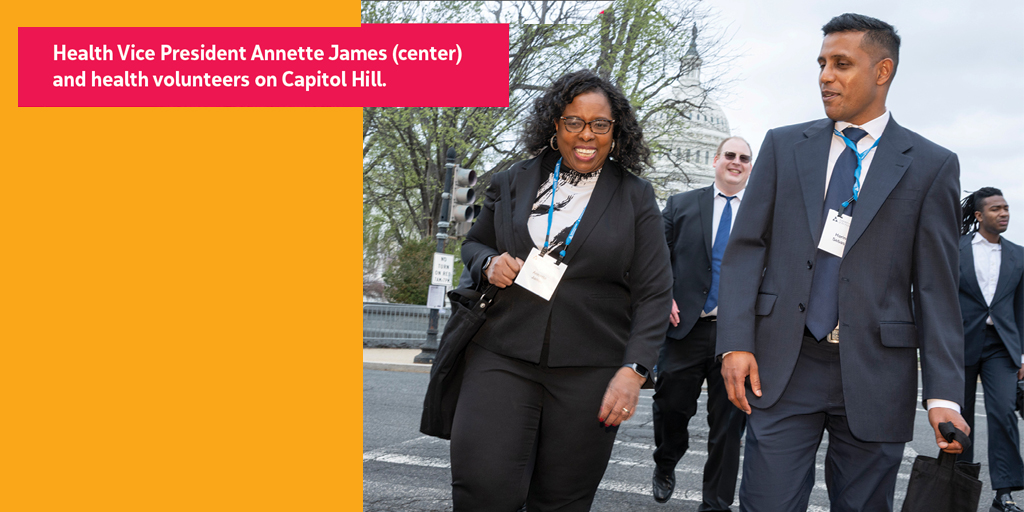
Beyond the Hill visits, the Academy also holds meetings with different federal agencies throughout the year, allowing federal agency staff and Academy volunteers the opportunity to delve deeper into policy discussions. This engagement, coupled with Hill visits, underscores the Academy’s mission to provide unbiased actuarial expertise and advice.
The federal landscape includes both the legislative and executive branches, which create laws and regulations that benefit greatly from the insights, expertise, and analysis that our Academy volunteers provide daily-both in their professional roles and their volunteer work for the profession. We are also intentional about ensuring our engagement remains transparent and nonpartisan, regardless of political party or ideology.
The Academy stands firm on its mission and vision to be the preeminent source of actuarial expertise as it works to serve the public and the U.S. actuarial profession, without the burden of taking a side. We share our insights and with everyone who has influence, interest, or awareness of our key policy issues, regardless of title, position, or opinion-a rarity in Washington, D.C.
Growing those relationships and building the Academy’s reputation as a source of truth comes in handy when pressing policy matters arise. That’s when practice councils often choose to send comment letters to leading lawmakers or congressional committees, sharing our nonpartisan insights on a given topic, based on work a committee or the practice council has done or is doing.
Recent examples include letters[1] sent by the HPC’s Individual and Small Group Markets Committee to the House Budget Committee leadership and Senate Leadership in response to H.R. 1, the One Big Beautiful Bill Act. The letters focused on potential changes to, and the impact of, different provisions under consideration on the individual health insurance market. The Academy also submitted a cross-practice letter[2] to the National Oceanic Atmospheric Administration (NOAA), strongly encouraging it to rethink retiring its Billion Dollar Weather and Climate Disasters database. The letter underscored the value of public databases, not only for the actuarial world, but also for broader research and the development of possible mitigation strategies that impact communities within and outside the U.S. Finally, the RPC’s Pension Committee sent a letter[3] in response to the Internal Revenue Service’s public request for feedback in helping it identify and prioritize its 2025-2026 Priority Guidance Plan.
State Efforts
On the state policy front, the Academy maintains a strong presence through its involvement with several state-focused organizations. Our most active and visible engagement is with the National Association of Insurance Commissioners (NAIC), where many of our volunteers and practice councils are actively engaged. The Academy also participates in the work of the National Council of Insurance Legislators (NCOIL) and the National Conference of State Legislatures (NCSL).
The Academy’s relationship with the NAIC is long-standing and grounded in close collaboration with the actuarial task forces and the regulators who serve on them. Read also “Securing Stronger NAIC-Academy Ties for Public Good” on page 26. It’s no surprise that the meeting agendas for the Life Actuarial Task Force, Health Actuarial Task Force, and Casualty Actuarial and Statistical Task Force are often filled with reports and presentations from Academy committees and volunteers-both on policy and professionalism-related topics. Regulators frequently turn to the Academy for reports and analysis to inform and support their work.
A recent example comes from the March 2025 national meeting, where life practice volunteers provided an update on the progress and potential framework recommendations related to the VM-22 Field test; health volunteers shared a recent report on the current state of long-term care insurance market; and professionalism volunteers briefed regulators on current and anticipated opportunities to comment on actuarial standards of practice (ASOPs).
The Academy’s engagement with the NAIC goes beyond the actuarial task forces. We frequently work with NAIC commissioners and the executive committees as they evaluate a range of projects and issues. One notable example is the newly created NAIC Risk-Based Capital (RBC) Model Governance (EX) Task Force. The Academy is actively involved as this commissioner-led task force develops guiding principles for updating RBC formulas across the life, health, and property/casualty lines of business. The task force also seeks to educate their international and federal counterparts on the efficacy and current state of RBC and support the state regulatory role in balancing company solvency with the availability of products to meet consumer needs.
The Academy submitted cross-practice comments[4] on the task force’s initial charges and offered verbal comments during a conference call and during the in-person meeting at the Spring National Meeting in March, emphasizing our commitment to working with the commissioners. The Academy continues to work with the task force’s leadership team, NAIC staff, and other stakeholders as the project progresses and new items emerge.
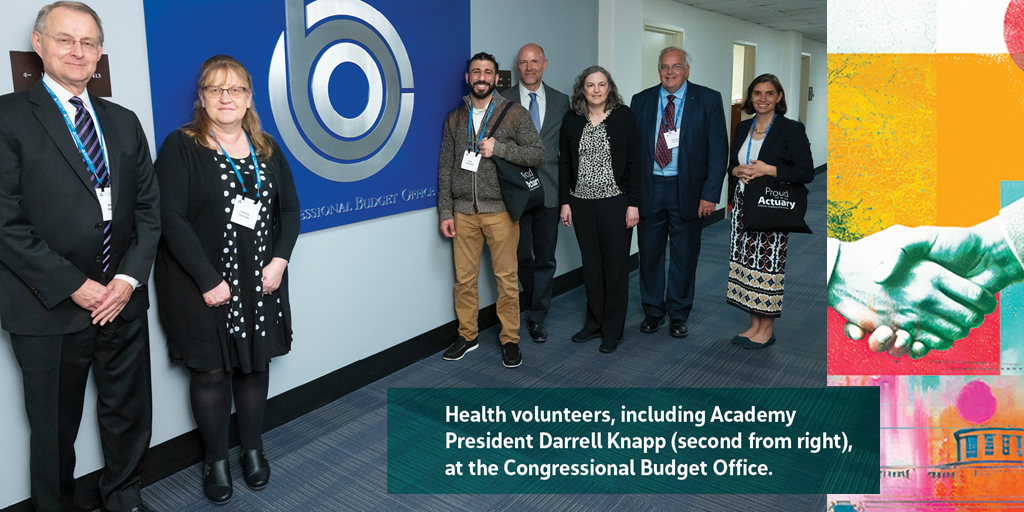
Katie Dzurec, the Academy’s director of state public policy outreach, said it is important to get relevant resources into the hands of state-level stakeholders at the right time to support decision-making. “Insurance regulation is predominantly a state-based endeavor, so conversations with state policymakers are critical,” she said. “It is our goal to get objective, relevant resources into the hands of state regulators, legislators, and others when they need them. We can’t do that if we don’t communicate with them.”
Expanding Policy Reach
One of the key priorities of the Academy is to educate the broader policy community about the wide range of topics that actuaries focus on while preserving our independent, nonpartisan, and balanced voice. We work with elected officials and regulators at the federal and state levels, as well as with the broader community of trade organizations, consumer advocacy groups, think tanks, and the media. We collaborate across all levels with organizations like the ACLI, AHIP, and NAMIC in the U.S., while also building working relationships with some international groups such as the Actuarial Association of Europe and the International Congress of Actuaries. We rely upon the expertise of our volunteers to identify and present potential solutions to the challenges across practice areas, all within the broader context of risk and financial security. So, what are those issues? You will find the information in the Academy’s Policy Forum,[5] which was built upon the premise of the Election Clearinghouse[6] that debuted last year. Today’s Policy Forum builds on the framework developed during the 2024 presidential election year and identifies the broader policy issues that continue to be top of mind for our volunteers, the profession, public policy stakeholders, and elected officials.
The Policy Forum offers a one-stop shop where anyone can access some of the Academy’s most impactful policy work. It includes a curated list of issue briefs, blogs, webinars, podcasts, presentations, and Contingencies articles. Rather than organizing content by practice areas, the Policy Forum groups resources under broad and cross-cutting themes, highlighting issues and concerns that you may recognize from news articles, political debates, and social commentary, including:
- Aging and financial security
- AI and data
- Impact of climate events
- Access to and affordability of insurance
- Investment and financial reporting
How did we select these topics? They’re not only timely-they’re also areas where an actuarial perspective adds real value.
Aging and financial security looks at how an increasing older U.S. population presents significant fiscal and social challenges, from increased health care needs to retirement security challenges to accessibility to key insurance products, including homeowners and flood insurance policies.
Trump Uses Executive Orders to Create Policy Pathway
With the federal legislative process increasingly hamstrung by the nation’s politically polarized environment, U.S. presidents have turned to using executive orders (EOs) more to set policy-even if they are only a temporary fix.
President Trump issued 142 EOs during the first 100 days of his second term in office, the most ever[12] to be issued during that period-far ahead of the 99 issued by Franklin Roosevelt during his first term in 1933. The orders set the administration policy but can be overturned by the courts and rescinded by future presidents.
Several of these EOs fall into policy areas that are of interest to the Academy and its membership-mostly in the health care space. Even though it is uncertain how long they will remain in place, it is imperative to understand them.
Health Care
- “Delivering Most-Favored-Nation Prescription Drug Pricing to American Patients”[13]-says Americans should not subsidize low-cost prescription drugs and biologics in other developed countries by paying more for the same products in the U.S.
- “Regulatory Relief to Promote Domestic Production of Critical Medicines”[14]-attempts to streamline the regulation of manufacturing pharmaceutical products in an effort to enhance the domestic pharmaceutical manufacturing base.
- “Lowering Drug Prices by Once Again Putting Americans First”[15]-seeks to reform federal health care programs, intellectual property protections, and safety regulations to provide access to prescription drugs at lower costs to American patients and taxpayers.
- “Empowering Patients Through Radical Price Transparency”[16]-intends to empower patients with accurate health care pricing information by having the Trump administration enforce price transparency regulations approved during his first term.
- “Lowering Costs and Reducing Barriers to IVF”[17]-directs policy recommendations to protect in vitro fertilization (IVF) and reduce out-of-pocket and health plan costs for such treatments.
- “Prohibiting Covid-19 Vaccine Mandates in Schools”[18]-bars federal funds from being used to support or subsidize educational institutions that require students to receive Covid-19 vaccination to attend school in person.
- “Enforcing the Hyde Amendment”[19]-ends the use of federal dollars to fund or promote abortion.
- “Make America Healthy Again”[20]-establishes the Make America Healthy Again Commission, which is tasked with investigating and addressing the state of health in America, with a focus on childhood chronic diseases.
Climate and Cyber Risk
- “Achieving Efficiency Through State and Local Preparedness”[21]-says state and local governments should play a more active and significant role preparing for incidents like weather events and cyber attacks in an effort to save lives, protect livelihoods, and reduce taxpayer spending.
Artificial Intelligence
- “Removing Barriers to American AI Innovation[22]-revokes President Biden’s EO on AI while calling for the U.S. to enhance its AI efforts through development of systems free from ideological bias or social agendas.
Rising health care costs and demographic changes place significant stress on Medicare and Medicaid. Actuaries evaluate cost trends, utilization patterns, and funding mechanisms to guide sustainable policy decisions. Meanwhile, through evaluating plan funding, demographic trends, and benefit structures, actuaries help ensure retirement systems remain financially sound and resilient. Their work supports policies that promote long-term financial security, both for individuals and for public and private institutions.
One area of focus for the Academy is the growing prominence of annuities as a financial security tool, a topic explored at our inaugural Insurance Investment Summit,[7] held in New York City last May. During the two-day forum, panelists and attendees engaged in dynamic conversations, discussing differing perspectives and experiences related to the insurance investment sector. Regulators also weighed in, with all participants focused on practical solutions for navigating this evolving landscape.

AI and data recognizes the important role of actuaries in assessing model accuracy, fairness, and transparency as AI becomes more embedded in decision-making processes, including in underwriting and claims management. The actuarial input is crucial in shaping ethical frameworks and governance standards that protect consumers and maintain trust in financial systems.
Reflecting the value that actuaries bring in this area is the recent issue brief[8] exploring the topic of discrimination in machine learning algorithms and the underlying data of these models. The Academy’s ongoing focus and work through the Cyber Toolkit is another reflection of how this continually evolving issue has considerable influence on public policy, federal and state regulation, and an international focus on how to build frameworks, establish protocols, and ensure that innovation continues while being balanced with transparency and accuracy.
As technology transforms the landscape, it raises important questions about how the actuarial profession will evolve. Actuaries have an opportunity not only to help shape the future of the industry and the organizations they serve, but also to ensure that, as systems and processes become increasingly automated, the human experience remains central.
The impact of climate events weighs how climate-related risks-including flooding, hurricanes, and wildfires-pose major challenges to financial systems and insurance markets. Actuaries contribute to policy discussions by quantifying the long-term impact of these risks and identifying adaptive strategies that enhance resilience across sectors.
Earlier this year, in response to the devasting and destructive wildfires in Los Angeles, the Academy published a supplement to the annual practice note that was developed by the Committee on Property and Liability Financial Reporting with the Casualty Practice Council.[9] The supplement offered insights and case studies for casualty actuaries who were in the middle of their annual opinion season. The supplement helped provide insight and support as actuaries were developing their Statement of Actuarial Opinion. The supplement was timely and impactful for our members and for the regulatory community, who were also struggling to understand how to account for the unprecedented event and its impact on the filings and insurance products.
Access to and affordability of insurance does a deep dive into the affordability of coverage, whether it’s for health, life, or property insurance. Actuaries support the development of policies and regulations that balance affordability with solvency, helping insurers manage risk responsibly while expanding coverage options for individuals and families.
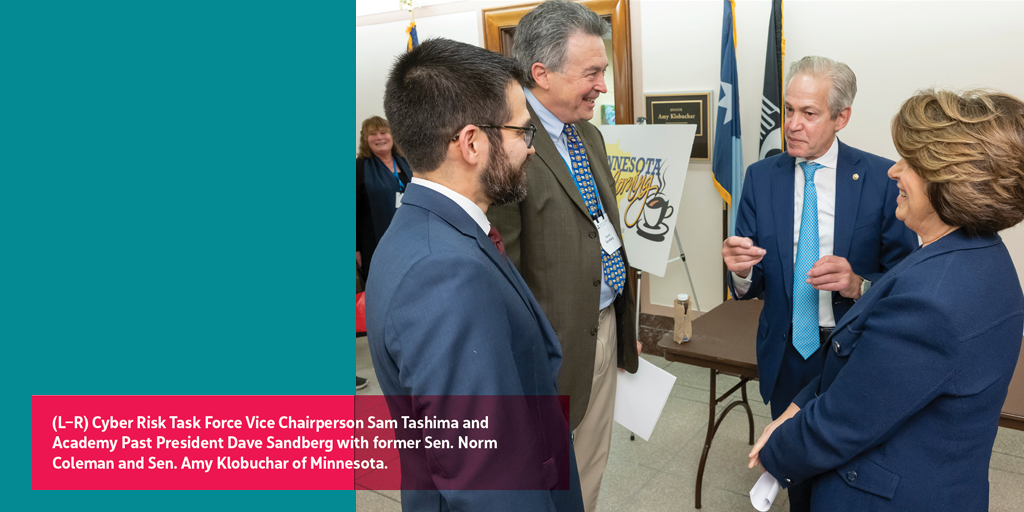
Some recent work by the Academy in this area is a February issue brief[10] on the state of long-term care insurance. The brief discusses the growing demand for this product, driven by the aging baby boomer generation, estimated at 73 million in 2020. Among those over 65, 70% are expected to need long-term care services.
Finally, investment and financial reporting delves into policy decisions around such things as tax incentives, retirement savings vehicles, and financial market regulation that can significantly influence Americans’ ability to build wealth and plan for the future.
An example of the Academy’s work on this issue is its paper[11] about the Security Exchange Commission’s (SEC) cybersecurity disclosure requirements, which outlines the SEC’s cybersecurity incident disclosure requirements; highlights some of the trends associated with the filings since the Cybersecurity Risk Management, Strategy, Governance, and Incident Disclosure rule became effective in December 2023; and discusses the potential financial risks toward organizations surrounding inaccurate or misleading disclosure.
The Policy Forum serves as the conduit to compile the Academy’s best work into one location that is accessible to a broader audience. It helps the Academy display its highest-profile content in the federal and state space together while allowing the organization to better fulfill its mission: to assist policymakers at all levels and serve the public and the U.S. actuarial profession.

Staying the Course
As the policy landscape continues to shift, the Academy remains committed to being a trusted, nonpartisan resource. Whether through issue briefs, Hill visits, or participation in regulatory discussions, our work reflects the power of actuarial insight to inform sound decision-making. By staying nonpartisan, forward-looking, and rooted in our mission, the Academy helps ensure that public policy is shaped by facts, fortified by expertise, and focused on the public good while reinforcing the valuable role an actuarial perspective brings to the equation.
Ted Gotsch is policy content and publications manager for the Academy.
Endnotes
- Letter to U.S. Senate Leadership; American Academy of Actuaries
Health Practice Council’s Individual and Small Market Groups Committee; June 3, 2025. - Letter to NOAA Acting Administrator Laura Grimm, American Academy of Actuaries’ Susan Kent, MAAA, FCAS Vice President, Casualty Practice Council; Steve Malerich, MAAA, FSA Vice President, Risk Management and Financial Reporting Council; Grace Lattyak, MAAA, EA, FCA, FSA Chairperson, Research Committee; June 5, 2025.
- Letter to the Internal Revenue Service; American Academy of Actuaries’ Grace Lattyak, MAAA, EA, FCA, FSA Chairperson, Pension Committee; May 30, 2025.
- Letter to Director Judith French and Commissioner Nathan Houdek, Co-Chairs of Risk-Based Capital Model Governance (EX) Task Force, American Academy of Actuaries’ Susan Kent, Vice President, Casualty; Annette James, Vice President, Health; Jason Kehrberg, Vice President, Life; and Steve Malerich, Vice President, Risk Management & Financial Reporting; March 12, 2025.
- Policy Forum; American Academy of Actuaries; April 2025.
- “Introducing the Academy’s Election 2024: Issues Clearinghouse”; American Academy of Actuaries’ Ted Gotsch; March 29, 2024.
- “Academy’s Insurance Investment Summit Increases Understanding of Sector”; American Academy of Actuaries’ Ted Gotsch; June 3, 2025.
- “Supplement to the 2024 COPLFR Practice Note-LA Wildfires”; American Academy of Actuaries’ Committee on Property and Liability Financial Reporting; February 2025.
- “Supplement to the 2024 COPLFR Practice Note-LA Wildfires”; American Academy of Actuaries’ Committee on Property and Liability Financial Reporting; February 2025.
- “The State of Long-Term Care Insurance-2025”; American Academy of Actuaries’ Long-Term Care Committee; February 2025.
- “SEC Cybersecurity Disclosure Requirements and Related Directors & Officers Liability Risks”; American Academy of Actuaries’ Committee on Cyber Risk; October 2024.
- “Trump sets executive order record in his first 100 days”; CBS News; April 29, 2025.
- “Delivering Most-Favored-Nation Prescription Drug Pricing to American Patients”; Office of the White House; May 12, 2025.
- “Regulatory Relief to Promote Domestic Production of Critical Medicines”; Office of the White House; May 5, 2025.
- “Lowering Drug Prices by Once Again Putting Americans First;” Office of the White House; April 15, 2025.
- “Fact Sheet: President Donald J. Trump Announces Actions to Make Healthcare Prices Transparent”; Office of the White House; Feb. 25, 2025.
- “Fact Sheet: President Donald J. Trump Expands Access to In Vitro Fertilization (IVF)”; Office of the White House; Feb. 18, 2025.
- “Fact Sheet: President Donald J. Trump Prohibits Federal Funding for COVID-19 Vaccine Mandates in Schools”; Office of the White House; Feb. 14, 2025.
- “Fact Sheet: President Donald J. Trump Enforces Overwhelmingly Popular Demand to Stop Taxpayer Funding of Abortion”; Office of the White House; Jan. 25, 2025.
- “Establishing the President’s Make America Healthy Again Commission”; Office of the White House; Feb. 13, 2025.
- “Achieving Efficiency Through State and Local Preparedness”; Office of the White House; March 19, 2025.
- “Removing Barriers to American AI Innovation”; Office of the White House; Jan. 23, 2025.